Energy drinks have become a staple for millions of people looking for a quick boost before a workout, during a long shift, or simply to push through an afternoon slump. But as awareness around sugar intake and artificial sweeteners grows, more consumers are asking a sharper question: does it matter what sweetens your energy drink? If you’re comparing options, check out our roundup of the best stevia energy drinks to see how today’s top picks stack up.
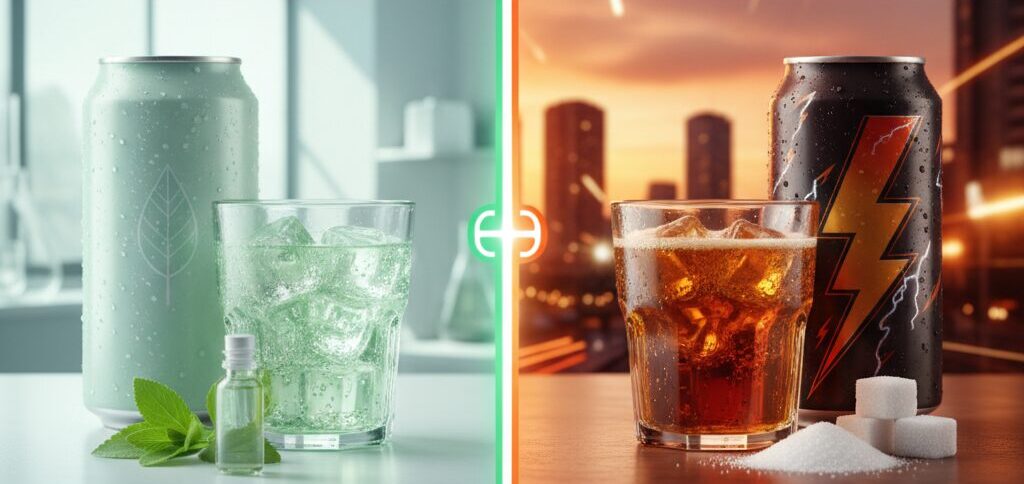
The short answer is yes, it matters quite a bit. Stevia-sweetened energy drinks and traditional sugar-sweetened (or artificially sweetened) energy drinks differ in meaningful ways, from how they affect blood sugar to how they taste and how your body processes them. This guide breaks it all down so you can make a genuinely informed choice.
Key Takeaways
- Stevia is a plant-derived, zero-calorie sweetener, while regular energy drinks typically use sugar, high-fructose corn syrup, or synthetic sweeteners like sucralose or aspartame.
- Traditional sugar-sweetened energy drinks can cause blood sugar spikes and crashes, which often worsen energy levels after the initial boost.
- Stevia does not raise blood glucose or insulin levels, making it a better fit for people managing blood sugar or following low-carb diets.
- The caffeine content in both types is often similar, meaning the stimulant effect is largely the same.
- Stevia has a distinct taste profile that some people find slightly bitter or herbal, which is worth considering if flavor matters to you.
- Neither type of energy drink is a health food, but stevia-sweetened versions generally carry fewer metabolic risks.
- Reading ingredient labels carefully is essential, as some “stevia” drinks still contain other sweeteners alongside it.
What Makes an Energy Drink “Regular”?
When most people think of a classic energy drink, they picture brands that have been around since the late 1990s and early 2000s. These drinks typically contain a blend of caffeine, B vitamins, taurine, and a significant amount of sugar. A standard 16 oz can of a popular energy drink can contain anywhere from 40g to 60g of sugar, which is roughly the equivalent of 10 to 15 teaspoons.
Beyond sugar, many mainstream energy drinks also use artificial sweeteners in their “sugar-free” or “zero” versions. Common examples include:
- Sucralose (found in many zero-calorie versions)
- Acesulfame potassium (Ace-K) (often combined with sucralose)
- Aspartame (less common today but still present in some products)
These synthetic sweeteners are calorie-free but come with their own set of ongoing research questions around gut microbiome effects and metabolic signaling.
What Is Stevia and How Is It Different?
Stevia is derived from the leaves of the Stevia rebaudiana plant, native to South America. The sweet compounds extracted from these leaves, called steviol glycosides, are intensely sweet, roughly 200 to 300 times sweeter than table sugar, yet they contain no calories and do not raise blood sugar levels.
Unlike artificial sweeteners, stevia is considered a natural sweetener, though it still undergoes processing before it ends up in your drink. The key distinction is its origin: it comes from a plant rather than being synthesized in a lab.
From a regulatory standpoint, high-purity stevia extracts are generally recognized as safe (GRAS) by the FDA, and the sweetener has been approved for use in food and beverages across most major markets worldwide.
Side-by-Side Comparison: Stevia vs Regular Energy Drinks
| Feature | Stevia Energy Drinks | Regular (Sugar-Based) Energy Drinks |
|---|---|---|
| Calories per can | 0 to 10 | 150 to 220 |
| Sugar content | 0g | 40g to 60g |
| Blood sugar impact | Minimal to none | Significant spike and crash |
| Sweetener type | Natural (plant-derived) | Refined sugar or HFCS |
| Insulin response | Negligible | Elevated |
| Gut microbiome impact | Generally neutral | Can be negative with excess sugar |
| Suitable for keto/low-carb | Yes | No |
How Each Type Affects Your Body
Blood Sugar and Energy Levels
This is arguably the most important difference between the two. When you consume a sugar-laden energy drink, your blood glucose rises rapidly. Your pancreas responds by releasing insulin to bring it back down. If the spike is sharp enough, the resulting drop can leave you feeling more tired than before you drank it, the classic “sugar crash.”
Stevia does not trigger this cycle. Because steviol glycosides are not metabolized the same way as sugar, your blood glucose remains stable. The energy you feel from a stevia drink comes primarily from caffeine and other active ingredients, not from a temporary glucose surge.
This is especially relevant if you’re training regularly. Stable energy during a workout is generally more useful than a spike that fades. If you’re building out a home training routine, pairing your pre-workout drink wisely matters, and you can find practical workout ideas in this guide to quick workouts at home.
Caloric Load and Weight Management
For anyone tracking calories, the difference is stark. A regular energy drink can add 150 to 220 calories to your daily intake without providing any meaningful nutrition. Stevia-sweetened drinks typically clock in at under 10 calories per can.
Over time, those extra calories from sugary drinks add up. Research consistently links high consumption of sugar-sweetened beverages to weight gain, increased visceral fat, and a higher risk of metabolic syndrome. Stevia drinks sidestep this issue entirely.
Taste Differences
One reason stevia hasn’t fully replaced sugar in energy drinks is flavor. Stevia has a characteristic aftertaste that many people describe as slightly bitter, licorice-like, or herbal. Brands have worked hard to minimize this through formulation improvements and by blending stevia with other natural flavors, but it remains noticeable to some palates.
Regular sugar-sweetened drinks tend to have a cleaner, rounder sweetness that most people find more immediately satisfying. This is a subjective factor, but it’s worth knowing before you make the switch.
Ingredient Label Comparison
| Ingredient | Stevia Drinks | Sugar-Based Drinks |
|---|---|---|
| Caffeine | 80mg to 200mg | 80mg to 160mg |
| B Vitamins | Common | Common |
| Taurine | Often included | Often included |
| Sweetener | Stevia leaf extract | Sucrose, HFCS, or glucose |
| Artificial additives | Usually minimal | Often more prevalent |
| Preservatives | Varies by brand | Varies by brand |
One important note: always read the full ingredient list. Some drinks marketed as “stevia sweetened” still include sucralose or Ace-K alongside the stevia. If you’re trying to avoid artificial sweeteners entirely, look for products where stevia is the only sweetener listed.
Who Should Consider Stevia Energy Drinks?
Stevia-sweetened options tend to be a better fit for:
- People with type 2 diabetes or insulin resistance
- Those following ketogenic or low-carb diets
- Individuals trying to reduce overall sugar intake
- Anyone sensitive to the digestive effects of sugar alcohols
- People who want a cleaner label with fewer synthetic additives
If you’re also exploring other supplements and functional beverages as part of your routine, it’s worth understanding how ingredients interact. For example, many athletes pair their energy drinks with performance supplements like creatine. You can learn more in this comprehensive guide to creatine gummies.
What Both Types Have in Common
It’s easy to get caught up in the sweetener debate and forget that energy drinks of all kinds share some important characteristics.
- Caffeine is still the primary driver of the energy effect in both types. Whether your drink uses stevia or sugar, the stimulant impact is largely the same.
- Neither is a replacement for sleep or proper nutrition. Energy drinks can mask fatigue temporarily but do not address its root cause.
- Overconsumption carries risks. High caffeine intake from any source can cause elevated heart rate, anxiety, disrupted sleep, and dependence over time.
- Hydration still matters. Caffeine is mildly diuretic, so relying heavily on energy drinks without adequate water intake can work against you, especially during training.
For those looking to fuel performance and recovery more holistically, what you eat after training matters just as much as what you drink before it. The best post-workout meals for muscle gain is a useful companion resource here.
Conclusion
The difference between stevia energy drinks and regular energy drinks goes well beyond the sweetener. It touches on how your body manages blood sugar, how many calories you’re consuming, and what kind of ingredients you’re putting into your system day after day. Stevia-sweetened options offer a meaningful advantage for people who want the functional benefits of an energy drink without the metabolic drawbacks of sugar or the unknowns associated with synthetic sweeteners.
That said, no energy drink is a wellness product. Both types should be consumed mindfully, in appropriate amounts, and as part of a broader approach to health that includes solid nutrition, consistent training, and adequate rest. If you want a solid starting point for choosing a stevia-based option, revisit our guide to the best stevia energy drinks for a curated breakdown of what’s worth trying.
Frequently Asked Questions
Is stevia in energy drinks completely natural?
Stevia extract is derived from a plant, but it does go through processing before it reaches your drink. It is considered more natural than synthetic sweeteners like sucralose or aspartame, and it is FDA-recognized as safe for consumption.
Do stevia energy drinks still give you the same energy boost?
Yes. The energy effect in both types comes primarily from caffeine, not sugar. Stevia drinks deliver a similar stimulant effect without the blood sugar spike and subsequent crash that sugary drinks can cause.
Can people with diabetes drink stevia energy drinks?
Stevia does not raise blood glucose or insulin levels, making it a more suitable option for people with diabetes compared to sugar-sweetened drinks. However, individuals should still consult their healthcare provider about caffeine intake and overall suitability.
Why do some stevia energy drinks still taste bitter?
Stevia’s natural compounds can leave a slightly bitter or herbal aftertaste, particularly at higher concentrations. Many brands blend stevia with natural flavors to reduce this effect, though sensitivity to it varies from person to person.
Are stevia energy drinks better for weight loss?
They are generally more supportive of weight management goals because they contain virtually no calories and do not trigger insulin responses that can promote fat storage. However, they are not a weight loss tool on their own and work best as part of a calorie-conscious diet.
This article was last updated on March 17, 2026 .