Kettlebells have earned their place as one of the most versatile tools in fitness. Whether you’re training at home or in the gym, a single kettlebell can challenge your strength, cardiovascular endurance, and mobility all at once. If you haven’t already explored what this cast-iron implement can do, now is the time. Before diving into the exercises, it’s worth checking out our guide to the best adjustable dumbbells for home gym because pairing kettlebells with other free weights can take your home setup to the next level.
This article walks you through eight kettlebell exercises that deserve a permanent spot in your training plan, along with practical guidance on how to perform them and why they work.
Key Takeaways
- Kettlebell training builds strength, power, and endurance simultaneously
- The swing is the foundation of kettlebell movement, so master it first
- Many kettlebell exercises are compound movements that train multiple muscle groups at once
- Proper form matters more than heavy weight, especially with ballistic movements
- Kettlebells are highly effective for fat loss, muscle building, and functional fitness
- Even beginners can benefit from kettlebell training with the right starting weight and technique
- You can build a complete workout using just two or three exercises from this list
Why Kettlebells Work So Well
Unlike dumbbells or barbells, kettlebells have an offset center of mass. This design forces your body to stabilize constantly throughout each movement, recruiting more muscle fibers and improving coordination. Ballistic exercises like swings and cleans also develop explosive power in a way that traditional lifting rarely does.
The result is a training tool that bridges the gap between strength work and conditioning, making it ideal for people who want results without spending hours in the gym.
The 8 Best Kettlebell Exercises
1. Kettlebell Swing
The kettlebell swing is the cornerstone of kettlebell training. It targets the posterior chain, including the glutes, hamstrings, and lower back, while also elevating heart rate significantly.
How to do it:
- Stand with feet shoulder-width apart, kettlebell on the floor between your feet
- Hinge at the hips, grip the handle with both hands, and hike the kettlebell back between your legs
- Drive your hips forward explosively to swing the kettlebell up to chest height
- Let it swing back down and immediately hinge into the next rep
The swing is a hip-hinge movement, not a squat. Keep your back flat, core braced, and let your hips do the work.
2. Goblet Squat
The goblet squat is arguably the best squat variation for beginners and a staple for experienced lifters too. Holding the kettlebell at your chest acts as a counterbalance, making it easier to achieve depth while keeping an upright torso.
Muscles worked: Quads, glutes, core, upper back
Hold the kettlebell by the horns (the sides of the handle) at chest height. Squat down until your elbows touch the inside of your knees, then drive back up through your heels. It’s simple, effective, and teaches excellent squat mechanics. If you want to explore other squat variations and equipment, the overview of squat machine types is a useful reference for understanding how different tools complement bodyweight and free weight training.
3. Kettlebell Clean
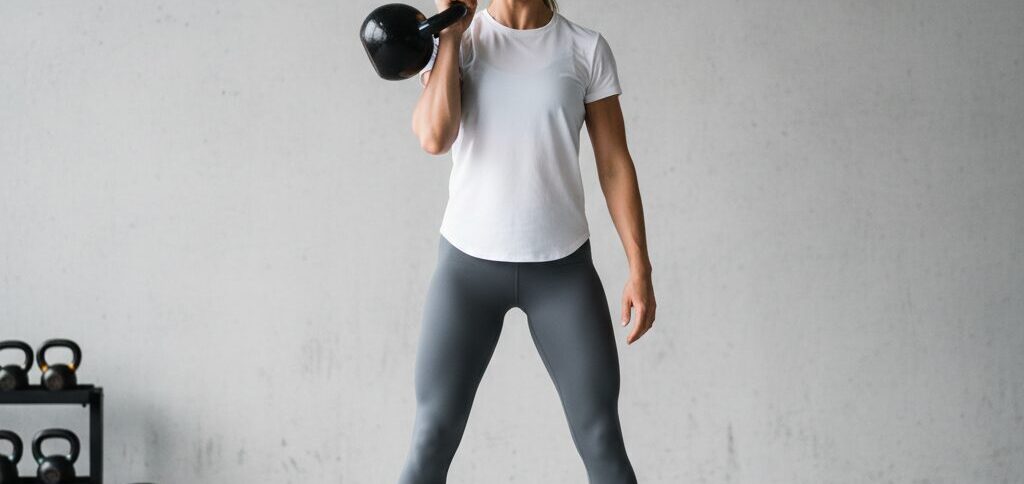
The clean transitions the kettlebell from a swing into a racked position at your shoulder. It’s a technical movement but worth learning because it’s the gateway to more advanced exercises like the press and jerk.
Key points:
- Keep the kettlebell close to your body throughout
- Use your hip drive, not your arm, to initiate the movement
- The kettlebell should land softly in the rack position, not crash into your forearm
Once you’re comfortable with the clean, you’ll have a powerful tool for building upper body strength and full-body coordination. The clean also shares movement principles with Olympic-style lifting, and if that style of training interests you, the clean and jerk guide covers the barbell version in detail.
4. Kettlebell Press
From the rack position, the kettlebell press develops shoulder strength, tricep power, and core stability. Because the weight sits differently than a dumbbell, it challenges your shoulder stabilizers in a unique way.
How to do it:
- Start in the rack position, with the kettlebell resting on your forearm and your elbow tucked close to your body
- Press the kettlebell straight overhead until your arm is fully locked out
- Lower it back to the rack position with control
For more exercises targeting shoulder and arm development, the exercises for the lateral head of the triceps make an excellent complement to overhead pressing work. You can also pair the press with long head tricep exercises for complete arm development.
5. Kettlebell Romanian Deadlift
The single-leg or two-handed Romanian deadlift with a kettlebell is one of the best exercises for hamstring and glute development. It also builds the hip-hinge pattern that carries over into swings, cleans, and everyday movement.
Muscles worked: Hamstrings, glutes, lower back, core
Hold the kettlebell with both hands in front of your thighs. Push your hips back while lowering the weight down your legs, keeping a slight bend in the knees. Stop when you feel a strong stretch in your hamstrings, then drive your hips forward to return to standing. If you’re looking for more hamstring-focused work, the lying leg curl alternatives article covers a range of effective options that pair well with this movement.
6. Kettlebell Turkish Get-Up
The Turkish get-up is one of the most complex and rewarding exercises in the kettlebell toolkit. It takes you from lying on the floor to standing upright, all while holding a kettlebell overhead with one arm.
Why it’s worth the effort:
- Develops shoulder stability and strength
- Improves hip mobility and thoracic rotation
- Challenges coordination and body awareness
- Works the entire body in a slow, controlled sequence
Start with a light weight or even no weight at all while learning the movement pattern. Once mastered, it’s a full-body assessment and workout in one.
7. Kettlebell Row
The single-arm kettlebell row builds back thickness and corrects muscular imbalances between sides. It’s a simple pulling movement that pairs well with pressing exercises for balanced upper body development.
How to do it:
- Place one hand and the same-side knee on a bench for support
- Hold the kettlebell in the opposite hand with your arm hanging straight down
- Row the kettlebell toward your hip, driving your elbow back and squeezing your lat at the top
- Lower with control and repeat
Keep your torso parallel to the floor and avoid rotating your hips. If you train at home without a bench, a weight bench is one of the most useful additions you can make to a home setup, and this exercise is one of the main reasons why.
8. Kettlebell Snatch
The kettlebell snatch is the most demanding exercise on this list and one of the most rewarding. It takes the swing and clean concepts and combines them into a single explosive movement that drives the kettlebell from between your legs to overhead in one fluid motion.
Benefits:
- Exceptional cardiovascular conditioning
- Full-body power development
- Grip strength and forearm endurance
- High caloric burn in a short time
The snatch requires good technique before adding weight. Practice the swing and clean thoroughly before attempting it. Once you’re there, it’s one of the most efficient exercises you can do for total-body fitness.
Kettlebell Exercise Quick Reference
| Exercise | Primary Muscles | Difficulty | Best For |
|---|---|---|---|
| Swing | Glutes, Hamstrings, Core | Beginner | Power, Conditioning |
| Goblet Squat | Quads, Glutes | Beginner | Strength, Technique |
| Clean | Full Body | Intermediate | Power, Coordination |
| Press | Shoulders, Triceps | Intermediate | Strength |
| Romanian Deadlift | Hamstrings, Glutes | Beginner | Strength, Mobility |
| Turkish Get-Up | Full Body | Advanced | Stability, Coordination |
| Row | Back, Biceps | Beginner | Strength, Balance |
| Snatch | Full Body | Advanced | Power, Conditioning |
Sample Kettlebell Workout Structure
| Goal | Exercise Selection | Sets x Reps | Rest |
|---|---|---|---|
| Fat Loss | Swing, Goblet Squat, Clean | 4 x 15 | 30 to 45 sec |
| Strength | Press, Row, Romanian Deadlift | 4 x 8 | 60 to 90 sec |
| Full Body | Turkish Get-Up, Snatch, Swing | 3 x 5 to 10 | 60 sec |
| Beginner | Goblet Squat, Swing, Row | 3 x 10 | 60 sec |
If you’re new to structured training or want to build out a complete home routine, the guide to quick workouts at home offers practical frameworks you can apply alongside kettlebell training. For those focused on fat loss specifically, the fast fat loss gym workout for ladies demonstrates how to structure sessions around compound movements in a similar way.
Conclusion
Kettlebells reward consistency and good technique. The eight exercises covered here span every major movement pattern, including hinge, squat, push, pull, and carry, making it possible to build a complete training program around them. Start with the swing and goblet squat to build your foundation, then progressively work toward the Turkish get-up and snatch as your skill develops. Whether your goal is fat loss, muscle building, or improved athleticism, kettlebell training can get you there efficiently and without a room full of equipment.
FAQs
How heavy should my kettlebell be for beginners?
Most beginners do well starting with 8 to 12 kg (18 to 26 lbs) for women and 16 kg (35 lbs) for men. The right weight allows you to complete sets with good form without compromising technique.
Can you build muscle with kettlebells alone?
Yes, kettlebells can build meaningful muscle, especially for beginners and intermediate lifters. Compound movements like the press, row, and goblet squat provide sufficient mechanical tension for hypertrophy when progressively loaded.
How often should I do kettlebell training?
Two to four sessions per week is effective for most people. Allow at least one rest day between sessions that target the same muscle groups, particularly after heavy swing or snatch work.
Are kettlebell exercises good for weight loss?
Kettlebell training burns a significant number of calories due to its combination of strength and cardiovascular demand. Ballistic exercises like swings and snatches are particularly effective for elevating heart rate and increasing metabolic rate.
What’s the difference between a kettlebell swing and a snatch?
The swing brings the kettlebell to chest height using a two-handed grip, while the snatch uses one hand and drives the kettlebell all the way overhead in a single movement. The snatch is more technically demanding and requires more shoulder stability and coordination.
This article was last updated on March 17, 2026 .