Building a home gym sounds like an expensive project, but it doesn’t have to be. With some smart planning and a clear sense of priorities, you can put together a functional training space for a fraction of what most people assume it costs. Whether you’re working with a spare bedroom, a garage corner, or just a patch of living room floor, this guide walks you through exactly how to build a home gym on a budget, step by step.
If you’re looking for specific gear recommendations, check out [The 10 Best Adjustable Dumbbells for Home Gym of.thefitness.blog/best-adjustable-dumbbells/) to get a head start on one of the most versatile pieces of equipment you’ll buy.
Key Takeaways
- Start with a clear budget and stick to it before buying anything
- Prioritize versatile, multi-use equipment over single-purpose machines
- Buy secondhand wherever possible to cut costs significantly
- Flooring and space preparation matter more than most people realize
- Bodyweight training is free and highly effective, especially early on
- Build your gym gradually rather than trying to buy everything at once
- Adjustable dumbbells, resistance bands, and a pull-up bar cover most fitness goals
- Track your needs based on your actual goals, not what looks impressive
Step 1: Define Your Budget and Goals Before Buying Anything
The biggest mistake people make when building a home gym is buying equipment before they know what they actually need. Spend time first on two things: setting a realistic budget and identifying your specific fitness goals.
A functional home gym can be built for anywhere between $100 and $1,000 depending on your goals and how creative you are with sourcing gear. Someone focused on general fitness and fat loss needs very different equipment than someone training for strength or hypertrophy.
Ask yourself:
- Are you focused on cardio, strength training, or both?
- How many people will use the space?
- How much room do you actually have available?
- What does your weekly training schedule look like?
Once you answer these questions, your equipment list writes itself.
Step 2: Choose and Prepare Your Space
You don’t need a dedicated room to build a home gym. A 6×8 foot area is enough to get started. What matters more is that the space is safe, accessible, and set up properly.
Flooring is one of the most overlooked investments. Working out on bare concrete or hardwood is uncomfortable and can damage both your joints and your floor. Rubber flooring tiles or foam interlocking mats are affordable and protect the surface beneath your equipment.
| Flooring Type | Average Cost | Best For |
|---|---|---|
| Foam interlocking tiles | $1-2 per sq ft | Light cardio, yoga, stretching |
| Rubber gym tiles | $2-4 per sq ft | Weights, general strength training |
| Horse stall mats | $1.50-2 per sq ft | Heavy lifting, deadlifts |
| Carpet tiles | $1-3 per sq ft | Low-impact workouts, bodyweight |
Horse stall mats from farm supply stores are a favorite among budget-conscious home gym builders. They’re thick, durable, and significantly cheaper than gym-branded rubber flooring.
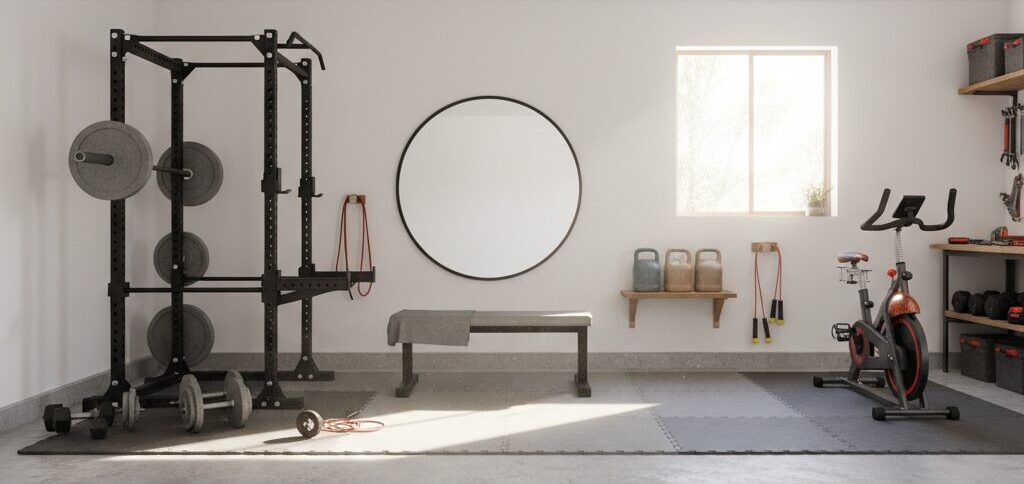
Also consider lighting, ventilation, and a mirror if possible. A well-lit, well-ventilated space makes workouts more enjoyable and helps with form feedback.
Step 3: Build Your Equipment List Strategically
This is where smart budgeting separates a useful home gym from an expensive collection of underused gear. Focus on equipment that serves multiple purposes and covers the widest range of movements.
The Essential Starter Kit
For most people, this combination covers the majority of training needs:
- Resistance bands – Excellent for warm-ups, mobility work, and adding resistance to bodyweight exercises. A full set typically costs $20-40. The 10 Best Resistance Bands for Bodybuilding of 2026 is a good place to compare options.
- Adjustable dumbbells – A single pair replaces an entire rack of fixed weights. They’re space-efficient and cost-effective over time.
- Pull-up bar – A doorframe pull-up bar costs around $30 and unlocks dozens of upper body exercises.
- Jump rope – One of the most underrated cardio tools available. Cheap, compact, and highly effective.
- Yoga mat – Essential for floor work, stretching, and core training.
This starter kit can be assembled for $150-250 and covers strength, cardio, and mobility training effectively.
Intermediate Additions
Once you’ve outgrown the basics, consider adding:
- A flat or adjustable weight bench
- A barbell and weight plates
- Kettlebells
- A pull-up and dip station
For a deeper look at strength-focused equipment, The 10 Best Barbells of 2026 covers the full spectrum from budget to premium options.
Step 4: Buy Secondhand Wherever Possible
The secondhand fitness equipment market is enormous, and prices are often 50-70% below retail. Gym closures, post-New Year resolutions fading, and people upgrading their setups all create a constant supply of quality used equipment.
Where to find secondhand gym equipment:
- Facebook Marketplace
- Craigslist
- OfferUp
- Local garage sales and estate sales
- Gym liquidation sales
When buying used, inspect equipment carefully for rust, cracks in welds, worn cables, or damaged padding. Barbells, dumbbells, and weight plates are generally safe used purchases. Cables, pulleys, and electronic equipment require more scrutiny.
Step 5: Prioritize Free and Low-Cost Training Methods
One of the most powerful tools in your home gym is one that costs nothing: your own bodyweight. Push-ups, squats, lunges, planks, mountain climbers, and burpees are all highly effective and require zero equipment. Quick Workouts at Home: How to Get Fit Without a Gym outlines exactly how to structure these sessions for real results.
Combining bodyweight training with a few key pieces of equipment gives you an enormous range of workout options without a large financial commitment.
Step 6: Compare Cost vs. Value Before Every Purchase
Not all gym equipment delivers equal value for money. Here’s a breakdown of common purchases ranked by cost-effectiveness for home gym use:
| Equipment | Average Cost (New) | Versatility | Budget Score |
|---|---|---|---|
| Resistance bands | $20-40 | Very High | Excellent |
| Pull-up bar | $25-40 | High | Excellent |
| Jump rope | $10-25 | Moderate | Excellent |
| Adjustable dumbbells | $150-350 | Very High | Very Good |
| Kettlebell (single) | $30-80 | High | Very Good |
| Flat weight bench | $80-200 | High | Good |
| Barbell + plates | $150-400 | High | Good |
| Treadmill | $400-1500+ | Low-Moderate | Fair |
| Cable machine | $300-1000+ | High | Fair for budget builds |
Single-purpose cardio machines like treadmills take up significant space and budget. If cardio is a priority, a jump rope, resistance bands, or a secondhand stationary bike often deliver better value. If you’re set on a treadmill, The Quietest Treadmills covers options that work well in home environments.
Step 7: Build Gradually and Reassess Regularly
One of the most common budget mistakes is trying to buy everything at once. Instead, treat your home gym as a living project. Start with the essentials, train consistently for 60-90 days, and then identify missing from your work spending more money.
This approach keeps costs low and purchase is driven real training need rather than impulse or novelty.
A phased approach:
- 1-2: Resistance bands, pull-up bar, mat, jump rope
- **Month 3bbells or a set of fixed dumbbells
- Month 5-6: Weight bench, kett barbell depending on goals
- Month 7+: Specialty equipment based on specific training
Conclusion
Building a home gym on a budget is entirely achievable when you approach it with a clear plan Define your goals first your space properly, prioritize versatile equipment, and buy secondhand wherever you can. Avoid the trap of trying to replicate a gym at home. Instead, build something that fits your actual needs and the space you have available.
The best home gym is the one you actually use. Start small consistently, and add equipment as genuine needs arise. You’ll be surprised how effective a modest can be when it’s thoughtfully put together.
FAQs
What is the minimum budget needed to build a functional home gym?
You can build a functional home gym for as with a pull-up bar, resistance bands, a jump rope, and a mat adjustable dumbbells brings the total to around $250-300 significantly expands your training options.
Is it worth buying cheap gym equipment?
Budget equipment can be perfectly adequate for most home especially for lighter loads and bodyweight work. For heavy lifting, it’s worth spending a bit more on barbells and weight plates to ensure safety and durability.
What should I buy first for a home gym?
Start with the mostile and space-efficient options: resistance bands, a pull-up bar, and a mat. These cover a and cost very little compared to larger equipment.
How much space do I need for a home gym?
A 6×8 foot area is enough basic home gym setup. You need enough room to lie flat, perform auat or lunge, and move freely. Larger spaces allow for more equipment but are not a requirement to get started.
Can I build muscle with a home gym?
Yes, absolutely. Progressive overload, which is the key driver of muscle growth, can be achieved with adjustable dumbbells, resistance bands, and bodyweight exercises. Many people build significant muscle without ever stepping into a commercial gym.
This article was last updated on March 19, 2026 .