Pre-workout supplements vary widely in price, and understanding what drives those differences can help you make a smarter purchase. A tub that costs $20 and one that costs $60 may look similar on the label, but the ingredients, dosages, and quality behind them often tell a very different story.
This guide breaks down the current market landscape, compares popular options side by side, and explains what factors actually justify a higher price point.
Quick Answer: How Much Does Pre-Workout Cost?
Pre-workout supplements typically range from $0.50 to $2.50 per serving, depending on the brand, ingredient quality, and formula complexity. Budget options like C4 Sport and Six Star average around $0.50 to $0.80 per serving, while mid-range formulas like Optimum Nutrition Gold Standard and GHOST Legend fall between $1.00 and $1.50. Premium options can exceed $2.00 per serving.
Key Takeaways
- Pre-workout prices range from roughly $0.50 to $2.50 per serving across mainstream brands
- Cost per serving is a more useful metric than total price when comparing products
- Higher prices often reflect better ingredient dosing, not just branding
- Caffeine content, pump ingredients, and formula transparency are the biggest price drivers
- Budget options can still be effective if the key ingredients are properly dosed
- Always check the label for actual ingredient amounts, not just the ingredient list
Pre-Workout Price Comparison Table
| Product | Price (approx.) | Servings | Cost Per Serving | Caffeine |
|---|---|---|---|---|
| C4 Sport | ~$20 | 30 | ~$0.67 | 135mg |
| Six Star Pre-Workout | ~$22 | 30 | ~$0.73 | 320mg (2 scoops) |
| BSN N.O.-Xplode | ~$28 | 30 | ~$0.93 | Varies |
| Optimum Nutrition Gold Standard | ~$32 | 30 | ~$1.07 | 175mg |
| ProSupps Mr. Hyde | ~$30 | 30 | ~$1.00 | 196mg |
| Bucked Up | ~$40 | 30 | ~$1.33 | 200mg |
| RAW Nutrition Essential Pre | ~$40 | 30 | ~$1.33 | 200mg |
| GHOST Legend | ~$45 | 30 | ~$1.50 | Varies |
| REDCON1 Total War | ~$45 | 30 | ~$1.50 | 320mg |
| CELSIUS On-The-Go | ~$15 | ~14 sticks | ~$1.07 | 200mg |
What Makes Pre-Workout More Expensive?
Ingredient Dosing and Transparency
The single biggest factor in price is how much of each active ingredient is actually in the formula. A product with 4g of L-Citrulline per serving like RAW Nutrition’s Essential Pre costs more to produce than one with a fraction of that dose hidden inside a proprietary blend.
Transparent labels, where every ingredient and its exact dose is disclosed, are generally a sign of a better product. GHOST Legend is a strong example of this, listing every active ingredient clearly. Proprietary blends, common in budget products, may hide underdosed ingredients behind a combined weight.
Stimulant Profile
Caffeine is cheap, but how it’s delivered matters. Some products use caffeine anhydrous alone, while others combine it with extended-release forms or pair it with nootropic compounds like NeuroFactor to support focus. More complex stimulant systems add cost.
REDCON1 Total War and Six Star both offer 320mg of caffeine per full serving, which is on the higher end. If you’re newer to stimulants, a lower-caffeine option like C4 Sport at 135mg may be both safer and more cost-effective for your needs. For more background on what to look for in stimulant-based products, see this guide to the best and cheapest pre-workout supplements.
Pump and Endurance Ingredients
L-Citrulline and Beta-Alanine are the two most common performance ingredients outside of caffeine. Higher doses of these cost more to include. Bucked Up stands out with 6g of L-Citrulline per serving, which is a clinical-level dose that justifies its mid-to-premium price.
Beta-Alanine is present in most of these products at 3.2g, which is the clinically studied dose for reducing muscle fatigue. Products that hit this exact dose, like RAW Nutrition Essential Pre and C4 Sport, are delivering real value regardless of price tier.
Budget vs. Mid-Range vs. Premium: What’s the Real Difference?
Budget Pre-Workouts ($0.50 to $0.80 per serving)
These include C4 Sport and Six Star. They work, but you may be getting lower doses of key ingredients or a simpler formula. C4 Sport is NSF Certified for Sport, making it a solid choice for tested athletes who need a clean, affordable option. Six Star offers aggressive dosing at a low price point, particularly at the two-scoop serving.
Mid-Range Pre-Workouts ($0.90 to $1.35 per serving)
This is where most of the popular products land. Optimum Nutrition Gold Standard, ProSupps Mr. Hyde, Bucked Up, and RAW Nutrition all fall here. These formulas tend to offer better ingredient transparency, more complete profiles, and stronger brand accountability. If you’re building a consistent training routine, this range offers the best balance of cost and quality.
Premium Pre-Workouts ($1.50 and above) in flavor and identity. Whether that’s worth it depends on your training frequency and priorities.
For those training at home and looking to maximize their supplement budget, pairing a mid-range pre-workout with a solid home setup can be a smart approach. Check out this guide on how to build a home gym on a budget for practical ideas.
Is a More Expensive Pre-Workout Always Better?
Not necessarily. Price reflects production cost, branding, and marketing as much as quality. A mid-range product with a transparent label and properly dosed ingredients will outperform an expensive product with flashy packaging and underdosed actives every time.
The key questions to ask are:
- Is the label fully transparent? Can you see every ingredient and its exact dose?
- Are key ingredients at clinical doses? (e.g., 3.2g Beta-Alanine, 4-6g Citrulline)
- Does the caffeine level match your tolerance? More is not always better
- Is it third-party tested? This matters most for competitive athletes
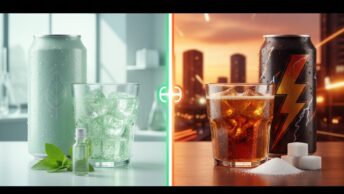
If you’re also evaluating energy drinks as an alternative to powders, this comparison of stevia energy drinks vs regular energy drinks is worth reading. And if you want a broader look at the best energy options on the market, the best energy drinks guide covers the top picks across categories.
How to Get the Best Value From Pre-Workout
- Compare cost per serving, not total price
- Start with lower caffeine doses if you’re new to pre-workout
- Look for clinically dosed ingredients, not just a long ingredient list
- Buy in bulk or during sales to reduce your per-serving cost
- Avoid proprietary blends when possible, especially at premium prices
Understanding your own training needs also helps. If you’re doing quick workouts at home, a lower-stimulant option may be all you need. Heavy lifting sessions or high-intensity training may benefit from a more complete formula.
Conclusion
Pre-workout price comparison comes down to more than the sticker price. Cost per serving, ingredient transparency, and dosing accuracy are the real metrics that determine value. Budget options can work well for beginners, while mid-range products generally offer the best combination of quality and affordability for regular gym-goers.
Understanding what you’re paying for helps you avoid overpaying for branding and underpaying for ingredients that don’t actually work.
FAQs
What is a good price for pre-workout per serving?
A cost of $0.90 to $1.50 per serving is considered a reasonable range for a quality pre-workout with properly dosed ingredients. Budget options under $0.80 can still be effective if the label is transparent and key ingredients meet clinical thresholds.
Why are some pre-workouts so much more expensive than others?
Price differences usually reflect ingredient quality, dosing levels, label transparency, and brand marketing costs. Products with higher doses of L-Citrulline, Beta-Alanine, and premium nootropics cost more to manufacture and therefore carry a higher retail price.
Is cheap pre-workout effective?
Yes, budget pre-workouts can be effective if they contain clinically dosed ingredients. C4 Sport, for example, includes CarnoSyn Beta-Alanine at a studied dose despite its low price. The key is checking the label rather than assuming cheap means ineffective.
How many servings should a pre-workout tub have?
Most standard pre-workout tubs contain 30 servings, which is the industry norm. Some products list 60 servings but use a half-scoop as the serving size, which can be misleading when comparing prices across brands.
Does more caffeine in pre-workout mean better results?
Not necessarily. Higher caffeine increases energy and alertness but also raises the risk of jitteriness, crashes, and tolerance buildup. Most research supports 150 to 300mg as an effective range for performance, making very high-caffeine products unnecessary for most people.
This article was last updated on October 6, 2026 .