

For a first triathlon, start with the Zoot Core Sleeveless FZ Racesuit if you want free shoulders, easy access to food on the bike and a front that opens fully. Choose the 2XU Core Sleeved Trisuit if you want more shoulder coverage and a close-fitting short designed around a short-course pad. Try the Synergy Elite Sleeveless Racerback if you prefer a racerback cut and want to compare how it sits under a wetsuit. The right suit is the one you can swim, ride and run in without having to adjust it every few minutes. Fit matters more than a claimed aerodynamic gain or a higher price. If you’re comparing men’s cuts, our men’s tri suit guide covers fit checks for a first race.
As an Amazon Associate, The Fitness Blog earns from qualifying purchases. We compared manufacturer specifications, fit guidance and exact Amazon US listings. Each purchase link opens a specific size and color. Use the manufacturer’s size chart to choose your own size before ordering.
Compare the women’s tri suits
Swipe to compare on smaller screens.
| Tri suit | Best for | Fit or feature | Main tradeoff |
|---|---|---|---|
| Zoot Core Sleeveless FZ | First race | Full zip, leg and rear pockets | Bring your own bra |
| 2XU Core Sleeved WT7404D | Shoulder coverage | Short-course tri pad, 6 in short | Check sleeve movement when swimming |
| Synergy Elite Racerback | Racerback fit | Sleeveless one-piece | Check straps against your bra and wetsuit |
Women’s tri suit bestsellers
The retailer’s bestseller list below changes independently of the recommendations above. Check whether each offer is for a complete suit or a separate garment, then confirm the exact cut, size and seller before buying.

- 【3 in 1 Padded Triathlon Suit】The women's one piece triathlon suits come with a foam-cushioned pad...
- 【Specially Designed Golden Ratio for Female】The Santic tri suit has body-zone oriented panel-cut with...

- Proven Technology Equals Superior Performance - Quick-drying, perforated chamois pad keeps you...
- Trims - Flatlock stitching throughout. Soft bias and large armholes to prevent chafing.

- HOW TO FIND THE BEST FIT: To properly fit into this triathlon suit women need both height & weight...
- PERFECT PADDING FOR SWIMMING, CYCLING & RUNNING: Our custom foam-cushioned pad on this tri suit for women...

- ENHANCED PERFORMANCE WITH THE CORE TRI SUIT: The sleeveless Zoot triathlon suit for the female triathlete...
- ITALIAN ENDURA+ FABRIC: Our tri suits are made with Italian Endura+ fabric, dries quickly, moves with...

- ✅ These Triathlon suits made from top quality Italian technical fabric developed for Triathlon Gear...
- ✅ Superior Technical Compression fabric used in our mens Triathlon Suits reduce muscle vibration, a...
The best women’s tri suits by use case
Zoot Core Sleeveless FZ Racesuit | Best starting point for a first race
The women’s Zoot Core Sleeveless FZ Racesuit combines a full front zip, a seven-inch inseam, two leg pockets and two rear pockets. Zoot describes the fit as more relaxed than a race-focused compression suit, but it should still sit close to your body. The model uses a triathlon chamois and leaves bra support to the athlete. The linked Amazon listing is Jet Black in Medium.
This is a sensible option if you want to keep food in predictable places and would rather open the front of a one-piece for ventilation or a stop. During a practice ride, put the same food in the leg and back pockets that you plan to carry on race day. Check whether you can reach the rear pockets with one hand, then see whether the leg pockets pull on the hem when full. If that movement bothers you, move more of your food to an approved bike storage solution before choosing a new suit.
A sleeveless cut makes shoulder coverage your responsibility. Check how the edges sit against the sports bra you plan to wear. A bra strap that lines up with the binding can create more rubbing than either garment would on its own. The full zip gives you more room to get the suit over your hips and shoulders, but it remains a one-piece and takes longer to manage at a stop than separate shorts and a top.

View Zoot Core Sleeveless FZ (Jet Black, Medium) on Amazon US
2XU Core Sleeved Trisuit WT7404D | Best for shoulder coverage and a short-course pad
The 2XU Core Sleeved Trisuit in Black/White is the WT7404D version. The maker specifies a six-inch compression short, silicone leg grippers and the TMF Core triathlon pad, with foam thickness varying from two to six millimeters. The pad is designed for short-distance racing. The linked offer is Extra Large. The similarly named Core Sleeved Trisuit can come in a different model with different leg length, so match the style code as well as the color.
Try this cut if you prefer fabric over the tops of your shoulders on the ride and run. Put your arms overhead, then hold a riding position and bring your elbows inward as you would on aero bars. If the fabric across your upper back restricts your reach or the sleeves feel tight under your wetsuit, try another size or cut. A sleeve that sits flat when you stand can wrinkle when your shoulders roll forward. If you frequently train in a sleeveless top and dislike tight sleeves, the two sleeveless picks are easier starting points.
The relatively thin pad is useful if you want minimal bulk while running and already know that your saddle works with light padding. For a long-course ride, do not buy on pad thickness alone. How the pad sits under load depends on saddle shape, your riding position and whether the suit stays in place when wet. A short-course pad may suit you for longer rides, but validate it over a sustained session before relying on it.

View 2XU Core Sleeved WT7404D (Black/White, Extra Large) on Amazon US
Synergy Elite Sleeveless Racerback | Best for a racerback fit
The Synergy Women’s Elite Sleeveless Racerback Tri Suit is a one-piece for swimming, cycling and running. The linked Iolite Purple Crystal listing is size Small and is the Elite, not the Pro. Use the model page to compare the back cut with the bra you intend to wear. The position of the straps can be a deciding factor if wide-backed tops feel restrictive or narrow straps tend to shift on your shoulders.
Try this option if you like the feeling of a racerback for swimming and want a suit that leaves the shoulder area open. When you try it on, check that the suit and bra straps stay flat through a full overhead reach. Put your wetsuit on over both if the race may permit one. Look for seams or straps that stack up in the same place and check the edges around the underarms after moving. A suit can feel secure on a dry fitting and still rub after a swim.
A racerback is a fit choice first. A long torso or broad upper back can change where the straps, waist and pad land. If the straps tug as you run or the pad drifts when you bend over the bars, compare a different cut. If you want more upper-arm coverage, start with the 2XU instead of buying the Synergy and hoping an extra layer will work for the swim.
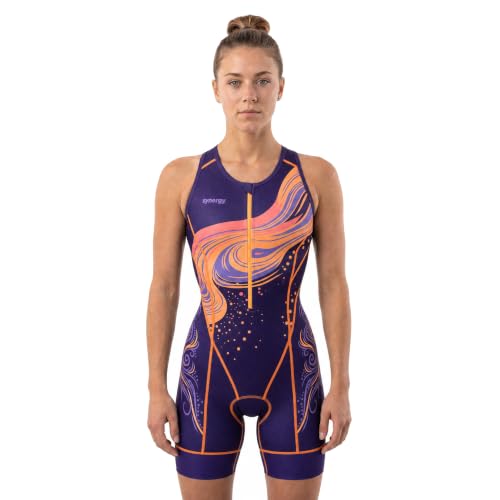
View Synergy Elite Racerback (Iolite Purple Crystal, Small) on Amazon US
Measure for the suit you will actually race in
Take measurements before choosing a size
Use a soft tape and follow the exact brand chart. Measure your bust, waist and hips in a relaxed stance with the tape level. If the brand asks for a torso measurement, take that one as well. Record the measurements before browsing the marketplace size picker. A Medium in one brand does not establish the size you need in another, and a manufacturer’s chart for compression tights may not apply to a tri suit.
If you fall between sizes, decide which area limits your movement. A size that fits your hips but pulls hard through the shoulders can make the swim awkward. A larger size that fixes the shoulders may leave loose fabric near the lower back or let the pad move against the saddle. Try the closest two if the seller’s returns terms allow it. A two-piece is a practical alternative when your measurements point to different top and bottom sizes. You get independent sizing and a separate waistband to assess.
Try the suit with the layers and equipment you will use. Wear the bra you expect to race in and check that the zipper can be raised without pulling the fabric sideways. On the bike, check whether the pad stays where you need it when your hips rotate forward. When you straighten up to run, check that it does not pull tight across the front of the hip. If the fit works only in one position, it is unlikely to be comfortable across all three legs.
Separate snug fabric from restricted movement
A tri suit should stay close enough that the pad and hems don’t shift much. You should still be able to breathe deeply, raise both arms and bend comfortably in your riding position. Put on the suit and take several full breaths. Move your shoulders through a swim stroke, then reach forward. Stand and walk around. Compression that feels tolerable on a short fitting can become distracting once you are warm and the fabric is wet.
Watch the leg openings as you move. A grip strip can keep a hem in place, but it should not dig into the skin or cause the fabric to bunch just above it. Compare where each hem lands relative to the widest part of your thigh. Two suits with similar inseams can feel different because of the stretch and width of the grippers. Try seated movement as well as standing, especially if your thigh shape changes when you bend your knee.
Look at the zipper and collar in your lowest bike position. Check whether the zipper end touches your neck and whether a bend creates a fold that rubs. Try closing and opening it with damp hands. On a race where the organizer restricts zipper opening, practice within those limits. If you expect a warm bike leg, good fit and a ventilation plan matter more than an opening you cannot use as intended.
Choose the pad, pockets and coverage for your event
Sprint and Olympic-distance races
For a sprint or Olympic-distance event, prioritize easy movement across all three legs and a suit that feels familiar from training. If your bike leg takes a modest amount of time and you already know your saddle works for you, a lower-bulk pad makes a reasonable starting point. A thick cycling pad can feel different once wet and may be more noticeable when running. Use an actual triathlon suit or shorts instead of assuming your favorite road cycling shorts will work the same way.
Pack only the food you intend to carry, then check how the pockets behave while running. A pocket that holds a flat gel neatly may let a larger item bounce. Use a familiar nutrition plan and follow event rules for where food and wrappers go. If a pocket is awkward to reach, try moving food to a more accessible spot before spending money on a suit with more storage. For many short events, one reachable pocket does more work than several that are hard to use.
Long-course and all-day use
A longer race gives small fit problems time to grow. Evaluate the suit after enough riding that you are tired and changing your position on the saddle. Check the top of the pad, the underarms, the bra band, the collar and the front of the hips after a ride-to-run session. Think about where the suit is still damp, how quickly you can open it at a stop and whether you can reach food without sitting up abruptly or taking your attention off the road.
No pad can compensate for a saddle position that never worked. If a thin pad is comfortable for you over long rides, a thicker one is not automatically better. If you consistently want more support than a short-course suit offers, look for a long-course-specific pad and compare it in training before committing. Buy early enough to test the garment and make a change if necessary. Do not decide based only on how plush a dry pad feels when you press it with your fingers.
Sleeved, sleeveless or two-piece
Choose sleeves if you want fabric over your shoulders and upper arms and can still reach freely when swimming. Fabric coverage does not establish the UPF of the entire garment, especially across mesh panels. Follow the maker’s coverage details and plan sun protection for exposed skin. If you prefer the feel of a sleeveless top, compare the armhole binding with your bra and wetsuit. Both cuts can work over any distance when they fit.
A one-piece removes the gap between shorts and top and keeps the pad in a consistent relationship to the rest of the suit. A two-piece lets you mix sizes and simplifies bathroom stops, which can matter in a long event. Check whether the top rides up when you reach for the bars or run. Before buying either, look up your event’s clothing rules and check that a bib belt, timing strap and any planned layers work with the garment. USA Triathlon’s rules are a starting point for US events, with the individual athlete guide providing event-specific details.
Use a rehearsal to check the full setup
Start with a familiar workout rather than a maximal effort. Swim in the suit if the seller’s terms allow and you are keeping it. Move directly to the bike and check the wet pad and how the fabric sits against your skin. Before running, put any food and equipment in the same place you plan to on race day. Pay attention to one or two clear changes you can make, such as moving a gel to a front pocket or using a bra with a different strap layout. Testing several changes at once makes it harder to identify which solved a problem.
Plan your race layers before you pack. A tri suit is the garment you generally keep on for all three legs. A wetsuit adds warmth and buoyancy for the swim, where permitted, and comes off before the bike. A swimskin serves a different purpose and its legality also depends on the event. Read the current race instructions for the water temperature, equipment rules and clothing requirements. If you do plan to wear a wetsuit, practice taking it off without pulling hard on the tri suit zipper or pockets.
After training, rinse or wash the suit according to its care label and let it dry completely. Check the pad and hems after washing. Do not assume that a short indoor ride will reveal everything about the suit. If a seam rubbed after a wet session, make a note of where it happened and which layers you wore. Compare different seam placement or a different bra before deciding the whole fit is wrong.
Frequently asked questions
Do I need to wear a sports bra under a tri suit?
That depends on the garment and the support you want. Zoot explicitly leaves bra selection to the wearer on its Core Sleeveless model. If you choose a separate bra, check it wet, with the suit zipped, and in both the bike and running positions. Avoid relying on a support claim from a listing unless it identifies the exact model and its construction.
Should I wear underwear under a tri suit?
A suit with an integrated triathlon pad is usually designed to sit directly against the skin at the pad. A separate layer can add seams and hold moisture. Follow the manufacturer’s instructions and try the combination you intend to wear before the event. Bra support is a separate fit decision.
Can I buy a tri suit one size larger for comfort?
Try it if the chart puts you between sizes, then check that the suit stays close enough when you move. Too much fabric can bunch behind the shoulders or let the pad shift on the bike. If sizing up solves torso length but creates loose shorts, compare another cut or buy separate top and bottom sizes.
Can I use a tri suit for pool training?
Check the label before making it your everyday pool suit. A race garment may use fabrics or grippers that wear faster with repeated exposure to chlorinated water. Use it enough to confirm race fit, rinse it as the maker directs, and use appropriate swimwear for routine pool sessions if the brand advises it.
How early should I buy before my first race?
Leave enough time for delivery, a return or size exchange, and at least one wet bike-to-run rehearsal. If the suit arrives just before the race, check movement and layers with the tags on before deciding to keep it. The best day to learn how a pad or strap feels is on a regular training day.
This article was last updated on November 15, 2026 .


