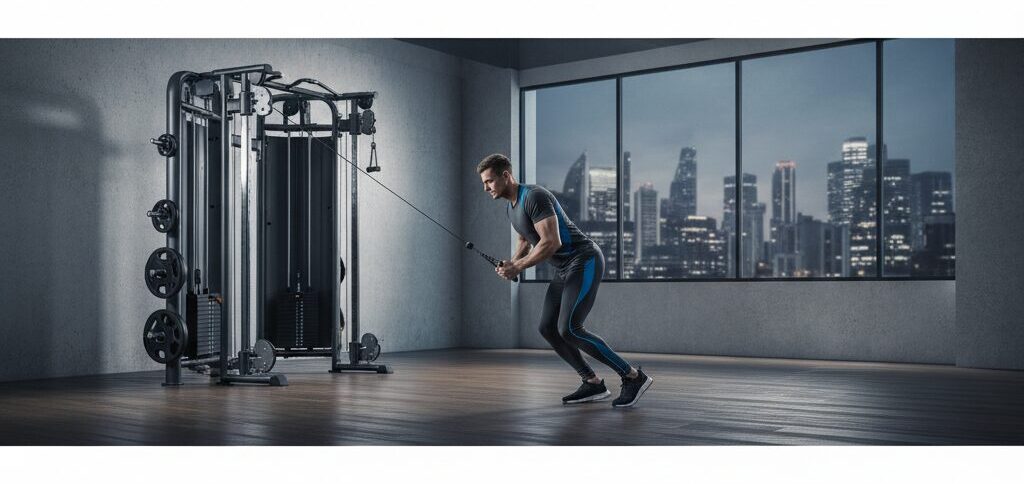
The cable wood chop is a staple in many strength and conditioning programs, and for good reason. It trains rotational power, engages the obliques, and builds functional core strength that transfers directly to sports and everyday movement. But not everyone has access to a cable machine, and some lifters simply want more variety in their core training. If you’re looking for a solid cable wood chop alternative, you’re in the right place.
Whether you’re training at home, working with limited equipment, or just want to switch things up, there are plenty of exercises that replicate the same movement pattern and muscle activation. If you’re building out a home setup, check out how to build a home gym on a budget for practical guidance on what equipment to prioritize.
Key Takeaways
- The cable wood chop primarily targets the obliques, transverse abdominis, and hip flexors through a rotational movement pattern
- Several effective alternatives can replicate this movement using resistance bands, dumbbells, medicine balls, or bodyweight
- Rotational core training improves athletic performance, spinal stability, and functional strength
- Most alternatives can be performed at home with minimal equipment
- Proper form and controlled movement are more important than load when training rotational power
- Both high-to-low and low-to-high variations should be included for complete oblique development
- Progressive overload still applies to core training, so track resistance and volume over time
What Makes the Cable Wood Chop So Effective?
Before diving into alternatives, it helps to understand what the cable wood chop actually does. The exercise involves a diagonal pulling motion, either from high to low or low to high, while rotating through the torso. This challenges the core in a way that traditional exercises like crunches or planks simply cannot replicate.
The primary muscles worked include:
- Obliques (internal and external) – the main drivers of rotation
- Transverse abdominis – the deep stabilizing layer of the core
- Glutes and hip rotators – essential for generating power through the hips
- Shoulders and upper back – active in controlling the movement
The cable machine provides continuous tension throughout the range of motion, which is one of its key advantages. Good alternatives should ideally maintain this tension or at least challenge the muscles through a similar rotational arc.
The 8 Best Cable Wood Chop Alternatives
1. Resistance Band Wood Chop
This is the most direct substitute for the cable version. A resistance band anchored to a fixed point, such as a door frame, squat rack, or heavy furniture, closely mimics the constant tension provided by a cable machine.
How to do it: Anchor the band at shoulder height or above. Stand sideways, grab the band with both hands, and pull diagonally downward across your body while rotating through the hips and torso. Control the return.
This is one of the most accessible options for home training. You can explore more resistance band exercises to build a complete routine around this tool.
2. Dumbbell Wood Chop
A dumbbell held with both hands can effectively replicate the wood chop pattern. While there’s no external resistance pulling against you the way a cable does, the rotational demand on the obliques remains high.
How to do it: Hold a single dumbbell with both hands. Start with it raised above one shoulder, then swing it diagonally down toward the opposite hip. Brace the core and drive the movement from the torso, not just the arms.
3. Medicine Ball Rotational Throw
This variation adds an explosive element that makes it ideal for athletes training rotational power. It shifts the focus from controlled tension to rapid force production, which is excellent for sports performance.
How to do it: Stand sideways to a wall. Hold a medicine ball at hip height, rotate away from the wall to load up, then explosively rotate and throw the ball against the wall. Catch and repeat.
This is one of several plyometric exercises that can add power development to your training.
4. Kettlebell Woodchopper
The kettlebell version adds a grip challenge and slightly shifts the center of mass, making the movement feel different from a dumbbell. It works particularly well for the low-to-high variation.
How to do it: Hold a kettlebell with both hands. Hinge at the hips and lower it toward the outside of one knee, then drive it up diagonally across the body toward the opposite shoulder. Squeeze the glutes and brace hard at the top.
If you want to expand your kettlebell training, check out these kettlebell exercises for ideas.
5. Landmine Rotational Press
The landmine setup creates a natural arc that closely resembles the cable wood chop’s diagonal path. It also allows for heavier loading than most bodyweight or band alternatives.
How to do it: Place one end of a barbell in a landmine attachment or secure it in a corner. Hold the other end with both hands at chest height, rotate to one side, then press and rotate back through center to the opposite side.
6. Pallof Press
The Pallof press is a core anti-rotation exercise, meaning it challenges the core to resist movement rather than produce it. This is actually a critical component of functional core strength that many people overlook.
How to do it: Using a cable machine or resistance band anchored at chest height, stand sideways and hold the handle at your chest. Press it straight out in front of you, hold for a beat, then return. The core fights the pull of the band the entire time.
7. Seated Rotational Twist with Plate
Simple and effective, this exercise can be done anywhere with a weight plate or even a folded towel for resistance. It isolates the obliques and builds endurance in the rotational muscles.
How to do it: Sit on the floor with knees bent and feet slightly elevated. Hold a weight plate with both hands at chest level. Rotate side to side, touching the plate to the floor on each rep.
8. Standing Oblique Crunch with Dumbbell
This is a lower-intensity option that works well as a warm-up or accessory movement. It targets the obliques through lateral flexion rather than rotation, which complements the other exercises in this list.
How to do it: Stand tall holding a dumbbell in one hand at your side. Laterally crunch toward the dumbbell side, then return to standing. The opposite oblique is working to control the movement.
Comparison Table: Cable Wood Chop vs. Alternatives
| Exercise | Equipment Needed | Rotation Type | Difficulty | Best For |
|---|---|---|---|---|
| Cable Wood Chop | Cable machine | Diagonal | Moderate | Gym training |
| Resistance Band Wood Chop | Resistance band | Diagonal | Moderate | Home training |
| Dumbbell Wood Chop | Dumbbell | Diagonal | Easy-Moderate | Beginners |
| Medicine Ball Throw | Medicine ball, wall | Rotational | Moderate-Hard | Athletes |
| Kettlebell Woodchopper | Kettlebell | Diagonal | Moderate | Functional training |
| Landmine Rotational Press | Barbell, landmine | Diagonal arc | Moderate-Hard | Strength focus |
| Pallof Press | Band or cable | Anti-rotation | Easy-Moderate | Core stability |
| Seated Plate Twist | Weight plate | Horizontal | Easy | Beginners, warm-up |
How to Program These Alternatives
Rotational core training is often undertrained because people default to crunches and planks. Including at least one rotational or anti-rotational movement in each training session will significantly improve core function over time.
Suggested Weekly Structure
| Training Goal | Recommended Exercises | Sets x Reps |
|---|---|---|
| General fitness | Band wood chop, Pallof press | 3 x 12-15 each side |
| Athletic performance | Medicine ball throw, kettlebell chop | 4 x 8-10 each side |
| Strength and power | Landmine press, dumbbell chop | 4 x 6-8 each side |
| Beginner core | Seated twist, oblique crunch | 2-3 x 15 each side |
A few important programming notes:
- Always train both sides equally to avoid imbalances
- Progress load gradually rather than jumping to heavy weights early
- Pair these with compound lifts like squats or deadlifts for a well-rounded session
- Include both high-to-low and low-to-high patterns to work all portions of the obliques
For those looking to build a complete workout routine without a gym, quick workouts at home offers a solid framework to build around.
Common Mistakes to Avoid
Even with good exercise selection, rotational training is easy to do poorly. Watch out for these common errors:
- Using only arm strength – The power should come from the hips and torso, not the shoulders
- Moving too fast – Speed kills form on rotational exercises; prioritize control
- Neglecting the eccentric phase – The portion of each rep is where a lot of core work happens
- Training only one direction – Both the high-to-low and low-to-high patterns matter
- Holding your breath – Brace the core but maintain steady breathing throughout
Conclusion
The cable wood chop is a fantastic exercise, but it is far from irreplaceable. Resistance bands, dumbbells, kettlebells, and medicine balls all offer effective ways to train the same rotational movement pattern. The key is understanding the mechanics behind the exercise and choosing alternatives that match your goals, equipment, and training level.
Rotational strength is one of the most overlooked components of core training. Adding even one or two of these alternatives to your weekly routine can make a real difference in athletic performance, injury prevention, and overall functional fitness. Start with the resistance band or dumbbell version if you’re new to the movement, and progress toward more challenging options as your strength and coordination improve.
FAQs
What muscles does the cable wood chop work?
The cable wood chop primarily targets the obliques, transverse abdominis, and hip rotators. The shoulders and upper back also play a supporting role in controlling the movement throughout the range of motion.
Can I do wood chop exercises without any equipment?
Yes, a bodyweight rotational twist or standing oblique crunch can provide a similar stimulus at low intensity. For more resistance, a resistance band anchored to a door is the most accessible option.
Is the wood chop exercise good for beginners?
It can be, as long as the load is kept light and the focus is on learning the rotational movement pattern. Beginners should start with a dumbbell or light resistance band before progressing to heavier variations.
How often should I train rotational core exercises?
Two to three times per week is sufficient for most people. Because these exercises recruit stabilizing muscles that also work during compound lifts, more frequent training is not always necessary.
What is the difference between a wood chop and a Pallof press?
The wood chop is a rotational exercise where the core produces movement, while the Pallof press is an anti-rotation exercise where the core resists movement. Both are valuable and complement each other well in a complete core training program.
This article was last updated on April 20, 2026 .