If you don’t have access to a cable machine, or you’re simply looking to add more variety to your back training, you’re in the right place. Cable rows are a staple in most gym programs for good reason: they build thickness in the mid-back, strengthen the lats, and improve posture. But they’re far from the only way to achieve those goals. Whether you’re training at home, dealing with equipment limitations, or just want to break out of a plateau, there are plenty of effective cable row alternatives that can deliver the same results.
If you’re building out a home setup, check out this guide on how to build a home gym on a budget for smart equipment choices that support exercises like the ones covered here.
Key Takeaways
- Cable rows primarily target the mid-back, lats, rhomboids, and biceps
- You can replicate cable row mechanics using barbells, dumbbells, resistance bands, and bodyweight
- Unilateral (single-arm) variations help correct muscle imbalances
- Resistance bands are one of the most accessible and underrated cable row substitutes
- Each alternative has unique advantages depending on your goals, equipment, and training level
- Maintaining proper form, especially a neutral spine, is essential across all rowing variations
- Mixing multiple alternatives into your program keeps training stimulus varied and effective
Why Cable Rows Are So Effective
Before diving into alternatives, it helps to understand what makes cable rows so valuable. The cable machine provides constant tension throughout the entire range of motion. This means your back muscles are working on both the pull and the return phase, which increases time under tension and promotes muscle growth.
Cable rows also allow for a horizontal pulling pattern, which is important for balanced shoulder health and overall upper body strength. Many lifters focus heavily on pressing movements (bench press, overhead press) and neglect horizontal pulling, which can lead to poor posture and shoulder imbalances over time.
The good news is that several exercises can replicate this stimulus without a cable machine.
The 5 Best Cable Row Alternatives
1. Barbell Bent-Over Row
The barbell bent-over row is arguably the most powerful cable row alternative available. It hits the same primary muscles, including the lats, rhomboids, rear deltoids, and biceps, while also demanding significant engagement from your core and lower back to maintain position.
How to perform it:
- Stand with feet shoulder-width apart, holding a barbell with an overhand or underhand grip
- Hinge at the hips until your torso is roughly parallel to the floor
- Pull the bar toward your lower chest or upper abdomen
- Squeeze your shoulder blades together at the top
- Lower the bar with control and repeat
Why it works: The barbell row allows you to load heavy, making it excellent for building raw back strength. An underhand grip shifts more emphasis to the lower lats and biceps, while an overhand grip targets the upper back and rhomboids more directly.
One important note: the bent-over position requires a strong lower back and good hip hinge mechanics. If your lower back fatigues quickly, consider bracing harder with your core or reducing the load.
2. Dumbbell Single-Arm Row
The single-arm dumbbell row is one of the most practical and effective alternatives to the cable row. Because it’s unilateral, it allows each side of your back to work independently, which is excellent for correcting imbalances that bilateral exercises can mask.
How to perform it:
- Place one knee and hand on a bench for support
- Hold a dumbbell in the opposite hand with a neutral grip
- Row the dumbbell toward your hip, keeping your elbow close to your body
- Squeeze at the top,
Why it works: The supported position removes lower back stress entirely, letting you focus purely on the target muscles. You can also use a greater range of motion compared to barbell rows, which can improve lat development over time. This makes it an ideal option for beginners and experienced lifters alike.
3. Resistance Band Row
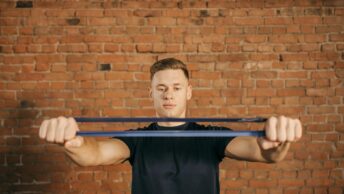
Resistance bands are one of the most underrated tools in strength training. When anchored at chest height, a resistance band mimics the angle and feel of a cable row more closely than almost any other alternative. The elastic tension also increases as you pull, which challenges your muscles through a progressive range of motion.
For a full breakdown of how to get the most out of bands, take a look at these 7 great resistance band exercises you should try.
How to perform it:
- Anchor a resistance band to a sturdy anchor point at chest height
- Sit or stand facing the anchor, holding the band with both hands
- Pull the band toward your abdomen, driving your elbows back
- Squeeze your shoulder blades together, then slowly return to start
Why it works: Bands are portable, affordable, and joint-friendly. They’re especially useful for warm-ups, rehabilitation, or high-rep finisher sets. The main limitation is that they max out in terms of resistance, so advanced lifters may need to combine them with other alternatives for progressive overload.
4. T-Bar Row
The T-bar row is a classic back exercise that provides a similar movement pattern to the cable row while allowing you to load significant weight. It’s a staple in bodybuilding programs for building mid-back thickness and is commonly available in commercial gyms.
If you want to explore equipment options for this movement, the best T-bar row attachments article is worth a read.
How to perform it:
- Load one end of a barbell and secure the other end in a landmine attachment or corner
- Straddle the bar and grip the loaded end using a close-grip handle or your hands
- Hinge forward at the hips, keeping your back flat
- Pull the bar toward your chest, squeezing your shoulder blades together
- Lower with control and repeat
Why it works: The T-bar row lets you use a neutral grip, which many lifters find more comfortable on the wrists and shoulders. The supported stance also reduces lower back strain compared to a standard bent-over barbell row. It’s one of the best tools for adding thickness to the mid-back.
5. Kettlebell Row
The kettlebell row functions similarly to the dumbbell row but with a slightly different feel due to the offset center of gravity of the kettlebell. This subtle difference increases the demand on your grip and stabilizing muscles, making it a worthwhile variation in its own right.
For more ideas on how to use this versatile tool, check out these 8 kettlebell exercises you need to add to your routine.
How to perform it:
- Hinge forward at the hips with a flat back, holding a kettlebell in one hand
- Row the kettlebell toward your hip, keeping your elbow tucked
- Squeeze at the top and lower with control
- Complete all reps on one side before switching
Why it works: Kettlebells are excellent for developing functional pulling strength and grip endurance. They’re also a great choice for home gym setups where space is limited.
Comparison Table: Cable Row Alternatives at a Glance
| Exercise | Equipment Needed | Best For | Difficulty Level |
|---|---|---|---|
| Barbell Bent-Over Row | Barbell + plates | Strength and mass | Intermediate |
| Single-Arm Dumbbell Row | Dumbbell + bench | Balance and isolation | Beginner to advanced |
| Resistance Band Row | Resistance band | Portability and rehab | Beginner |
| T-Bar Row | Barbell + attachment | Mid-back thickness | Intermediate |
| Kettlebell Row | Kettlebell | Functional strength | Beginner to intermediate |
Muscle Groups Targeted by Each Alternative
| Exercise | Lats | Rhomboids | Rear Delts | Biceps | Core |
|---|---|---|---|---|---|
| Barbell Bent-Over Row | High | High | Moderate | High | High |
| Single-Arm Dumbbell Row | High | Moderate | Moderate | High | Low |
| Resistance Band Row | Moderate | High | High | Moderate | Low |
| T-Bar Row | High | High | Moderate | Moderate | Moderate |
| Kettlebell Row | High | Moderate | Moderate | High | Moderate |
How to Program These Alternatives
Replacing cable rows in your training doesn’t require a complete program overhaul. Here are some practical guidelines:
- For strength: Use barbell bent-over rows or T-bar rows with heavier loads in the 4 to 6 rep range
- For hypertrophy: Single-arm dumbbell rows and kettlebell rows work well in the 8 to 15 rep range with controlled tempo
- For endurance or rehab: Resistance band rows at higher rep ranges (15 to 25) are effective and easy on the joints
- For variety: Rotate between two or three alternatives across your weekly training sessions to hit the back from slightly different angles
Pairing these with vertical pulling exercises like pull-ups or lat pulldowns ensures you’re developing the back fully in both planes of movement.
Tips for Getting the Most Out of Back Rowing Exercises
- Lead with your elbows, not your hands. Think of your hands as hooks and focus on driving your elbows back to maximize lat and rhomboid engagement
- Avoid shrugging your shoulders. Keep your shoulder blades depressed and retracted throughout the movement
- Control the eccentric. The lowering phase is just as important as the pull. Resist the weight on the way down
- Don’t overtrain the biceps indirectly. Rowing movements already tax the biceps significantly, so factor that into your arm training volume
- Prioritize form over load. A lighter weight with full range of motion will always outperform a heavy weight with poor technique
Conclusion
Cable rows are a valuable exercise, but they’re not irreplaceable. The five alternatives covered here, barbell bent-over rows, single-arm dumbbell rows, resistance band rows, T-bar rows, and kettlebell rows, each bring something unique to the table. Whether you’re limited by equipment, looking to address muscle imbalances, or simply want to refresh your back training, these movements can all deliver meaningful results.
The key is to choose alternatives that match your current goals, equipment, and fitness level, then apply progressive overload consistently over time. A strong, well-developed back doesn’t require a cable machine. It requires commitment, good technique, and smart exercise selection.
FAQs
Are cable row alternatives as effective as the cable row itself?
Yes, for most training goals they are equally effective. The main advantage of cable rows is constant tension, but exercises like resistance band rows and dumbbell rows can closely replicate this stimulus with proper technique and programming.
Can I do these alternatives if I have lower back pain?
The single-arm dumbbell row and resistance band row are the most lower-back-friendly options since they offer support or reduce spinal loading. Always consult a healthcare professional before training through pain.
How many sets and reps should I do for back rowing exercises?
For muscle growth, 3 to 4 sets of 8 to 15 reps works well for most people. For strength, aim for 4 to 5 sets in the 4 to 8 rep range with heavier loads and longer rest periods.
Which cable row alternative is best for beginners?
The single-arm dumbbell row and resistance band row are both excellent starting points. They’re easy to learn, forgiving on joints, and allow you to focus on proper form before adding significant load.
Should I use an overhand or underhand grip for rowing exercises?
Both grips are useful. An overhand grip emphasizes the upper back and rhomboids, while an underhand grip places more focus on the lower lats and biceps. Incorporating both into your training gives you more complete back development.
This article was last updated on March 30, 2026 .