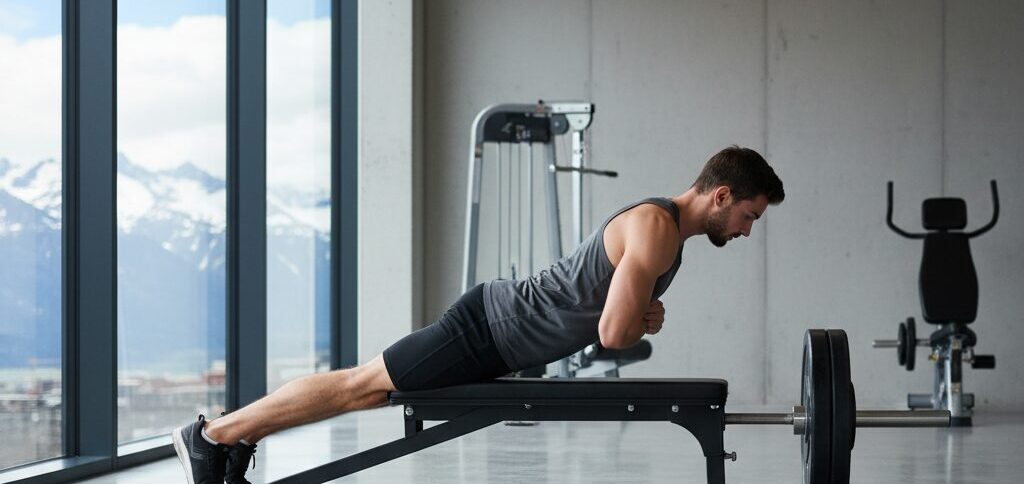
The Nordic curl is one of the most effective hamstring exercises in existence. It builds serious eccentric strength, reduces injury risk, and has been used by elite athletes for decades. But there’s a problem: most people can’t do them. They require a partner to hold your ankles, a dedicated GHD machine, or a Nordic curl bench, none of which are readily available in the average home gym or even many commercial gyms.
If you’ve been searching for exercises that deliver similar benefits without the same setup requirements, you’re in the right place.
This guide breaks down the five best Nordic curl alternatives, explaining what makes each one effective, how to perform them correctly, and who they’re best suited for.
Key Takeaways
- Nordic curls are highly effective for hamstring development and injury prevention, but they require specific equipment or a partner
- The best alternatives target the same eccentric hamstring strength that makes Nordic curls so valuable
- Romanian deadlifts, stability ball leg curls, and sliding leg curls are among the most accessible and effective substitutes
- Glute-ham raises offer the closest movement pattern to the Nordic curl for those with GHD access
- Consistency with these alternatives can meaningfully reduce hamstring strain risk, particularly for athletes
- Most of these exercises can be performed with minimal equipment, making them ideal for home training setups
Why Nordic Curls Are So Hard to Replace
Before diving into the alternatives, it helps to understand what makes the Nordic curl special. The movement is a knee flexion exercise performed under heavy eccentric load. You kneel on a pad, anchor your feet, and lower your body toward the floor using only your hamstrings to control the descent. The eccentric (lowering) phase is where most of the training stimulus comes from.
Research consistently shows that eccentric hamstring training significantly reduces the risk of hamstring strains, which are among the most common injuries in sprinting and field sports. Any good alternative needs to replicate at least part of this eccentric demand.
The 5 Best Nordic Curl Alternatives
1. Romanian Deadlift (RDL)
The Romanian deadlift is arguably the most practical and widely accessible Nordic curl alternative. It loads the hamstrings through a hip hinge pattern rather than knee flexion, but it delivers significant eccentric stretch under load, which is the key training stimulus you’re after.
How to perform it:
- Stand with feet hip-width apart, holding a barbell, dumbbells, or kettlebells
- Push your hips back while maintaining a neutral spine
- Lower the weight along your legs until you feel a deep stretch in your hamstrings
- Drive through your hips to return to the starting position
The RDL is particularly effective because it allows you to load the movement progressively over time. It also trains the hamstrings in a lengthened position, which is associated with greater muscle hypertrophy. If you’re training at home, adjustable dumbbells make this exercise easy to scale without needing a full barbell setup.
Best for: Beginners and intermediate lifters looking for a safe, loadable hamstring exercise
2. Stability Ball Leg Curl
This exercise is one of the closest movement-pattern matches to the Nordic curl that you can do with minimal equipment. It involves both hip extension and knee flexion, which closely mirrors the muscular demands of the Nordic curl.
How to perform it:
- Lie on your back with your heels resting on a stability ball
- Lift your hips off the floor into a bridge position
- Pull the ball toward your glutes by flexing your knees
- Slowly extend your legs back out, controlling the eccentric phase
The key is to keep your hips elevated throughout the movement. Dropping the hips removes the hamstring tension and turns it into a different exercise entirely. The eccentric return (straightening the legs) is where the real hamstring work happens, so don’t rush it.
Best for: Home gym users who want a no-machine option with genuine eccentric loading
3. Sliding Leg Curl
The sliding leg curl is a highly underrated exercise that mimics the Nordic curl pattern more closely than almost any other bodyweight option. You can perform it on a hardwood or tile floor using socks, or on a gym floor using furniture sliders.
How to perform it:
- Lie on your back with your heels on sliders or in socks on a smooth surface
- Bridge your hips up
- Slide your feet away from your body, lowering your hips toward the floor
- Pull your feet back in using your hamstrings
This exercise is particularly demanding because the hamstrings must work eccentrically as your legs extend outward. It’s a surprisingly challenging movement even for experienced lifters. If you’re building out a home training setup, this pairs well with other bodyweight exercises covered in this guide to quick workouts at home.
Best for: Athletes and intermediate lifters who want bodyweight eccentric hamstring training
4. Glute-Ham Raise (GHR)
The glute-ham raise is the closest structural alternative to the Nordic curl. It uses a GHD (glute-ham developer) machine and involves the same knee flexion under load that defines the Nordic curl pattern. The main difference is that the GHD machine supports the movement more than a partner or ankle anchor would, making it slightly more manageable.
How to perform it:
- Set up on a GHD machine with your feet secured and thighs resting on the pad
- Lower your torso toward the floor by extending at the knee
- Use your hamstrings to pull yourself back up
- Keep your body in a straight line from knees to head throughout
If your gym has a GHD machine, this should be your first choice as a Nordic curl substitute. It allows for progressive loading (you can hold a plate to increase difficulty) and trains the same eccentric strength pattern. The movement also incorporates the glutes, which makes it a more complete posterior chain exercise.
Best for: Intermediate to advanced lifters with GHD machine access
5. Single-Leg Romanian Deadlift
The single-leg Romanian deadlift takes everything that makes the standard RDL effective and adds a balance and stability challenge. Because you’re working one leg at a time, each hamstring is forced to work harder, and any strength imbalances between sides become immediately apparent.
How to perform it:
- Stand on one leg, holding a dumbbell or kettlebell in the opposite hand
- Hinge at the hip, extending the free leg behind you for balance
- Lower the weight toward the floor while keeping your back flat
- Return to standing by driving through the planted heel
This variation is excellent for athletes who need unilateral hamstring strength, which is critical in sprinting, cutting, and jumping movements. It also reduces spinal loading compared to bilateral deadlifts, making it a good option for those managing lower back issues.
Best for: Athletes, runners, and anyone with lower body strength imbalances
Comparison Table: Nordic Curl Alternatives at a Glance
| Exercise | Equipment Needed | Eccentric Load | Difficulty | Best For |
|---|---|---|---|---|
| Romanian Deadlift | Barbell or dumbbells | Moderate | Beginner | General strength |
| Stability Ball Leg Curl | Stability ball | High | Intermediate | Home gym users |
| Sliding Leg Curl | Sliders or socks | High | Intermediate | Bodyweight training |
| Glute-Ham Raise | GHD machine | Very High | Advanced | Gym-based athletes |
| Single-Leg RDL | Dumbbell or kettlebell | Moderate | Intermediate | Unilateral strength |
How to Program These Alternatives
Knowing which exercises to do is only half the equation. How you program them matters just as much.
| Goal | Recommended Exercise | Sets x Reps | Frequency |
|---|---|---|---|
| Injury prevention | Sliding leg curl | 3 x 8-10 | 2x per week |
| Muscle hypertrophy | Romanian deadlift | 4 x 10-12 | 2x per week |
| Athletic performance | Glute-ham raise | 3 x 6-8 | 2x per week |
| Unilateral strength | Single-leg RDL | 3 x 8 per side | 2x per week |
| Beginners | Stability ball leg curl | 3 x 10-12 | 2x per week |
For best results, pair your hamstring work with complementary lower body training. Exercises like plyometric movements and kettlebell exercises can round out a well-balanced lower body program and improve overall athletic capacity.
Tips for Maximizing Hamstring Development
- Prioritize the eccentric phase. Slow down the lengthening portion of every rep. This is where the most muscle damage and adaptation occurs.
- Don’t neglect hip hinge mechanics. A large portion of hamstring function involves hip extension, not just knee flexion. Include both types of movement in your training.
- Progress gradually. Eccentric hamstring training can cause significant delayed onset muscle soreness (DOMS), especially when you’re new to it. Start conservatively.
- Warm up properly. Dynamic stretches, leg swings, and light hip hinge movements before training can reduce injury risk.
- Train both legs equally. Use unilateral variations periodically to catch and correct any strength imbalances before they become a problem.
Conclusion
The Nordic curl is a gold-standard hamstring exercise, but it’s far from the only way to build strong, resilient hamstrings. Whether you’re working with minimal equipment at home or have access to a full gym setup, there are excellent alternatives that deliver real eccentric hamstring training without requiring a partner or specialized bench.
Start with whichever option best matches your current equipment and experience level. The Romanian deadlift is the most accessible entry point for most people, while the glute-ham raise and sliding leg curl offer the closest approximation of the Nordic curl’s training effect. Stick with two hamstring-focused sessions per week, emphasize the eccentric phase of every rep, and you’ll build the posterior chain strength that keeps you healthy and performing well.
Frequently Asked Questions
Are Nordic curl alternatives as effective as the real thing?
They can be highly effective, but no single alternative perfectly replicates the Nordic curl’s eccentric demand. Using a combination of alternatives, particularly sliding leg curls and glute-ham raises, gets you very close to the same training stimulus.
Can I do these exercises if I have a hamstring injury?
You should consult a physiotherapist or sports medicine professional before returning to hamstring training after an injury. That said, light Romanian deadlifts are often used in hamstring rehabilitation due to their controlled loading pattern.
How many times per week should I train my hamstrings?
Most people benefit from two dedicated hamstring sessions per week. This allows enough frequency for adaptation while giving the muscles time to recover, especially when using eccentric-heavy exercises.
Do I need a GHD machine to get a good hamstring workout?
No. The stability ball leg curl and sliding leg curl are both highly effective bodyweight options that require minimal equipment and can be done at home.
What is the difference between hip hinge and knee flexion hamstring exercises?
Hip hinge exercises like the RDL train the hamstrings by stretching them across the hip joint, while knee flexion exercises like the Nordic curl and leg curl train them across the knee joint. Ideally, your program includes both types for complete hamstring development.
This article was last updated on March 30, 2026 .