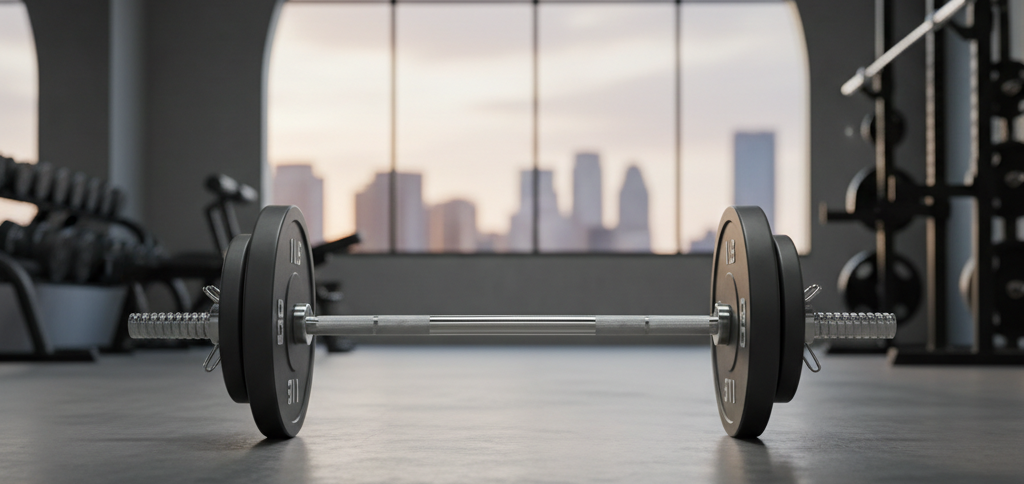
A 10 pound weighted bar might not look intimidating sitting in the corner of a gym, but don’t let its modest weight fool you. This simple piece of equipment is one of the most versatile training tools available, whether you’re a beginner building foundational strength, someone recovering from an injury, or an experienced athlete looking to improve mobility and muscular endurance. If you’re building out a home setup, check out The 10 Best Exercises with a Weighted Bar for a broader look at what this equipment can do.
This guide covers the best 10 pound weighted bar exercises, how to structure them into an effective workout, and why this underrated tool deserves a permanent place in your routine.
Key Takeaways
- A 10 pound weighted bar is ideal for beginners, active recovery, mobility work, and high-rep endurance training
- It can effectively target every major muscle group when used with proper technique and controlled movement
- Light bars are especially useful for overhead, rotational, and core-focused exercises where heavier loads compromise form
- You can build a complete full-body workout using only a 10 pound bar
- Progressive overload is still achievable with lighter bars by increasing reps, slowing tempo, or reducing rest periods
- Weighted bars are a smart option for home training due to their low cost and minimal storage footprint
- Consistency and technique matter far more than load when working with lighter weights
Why Train with a 10 Pound Weighted Bar?
Before diving into the exercises themselves, it’s worth understanding why someone would deliberately choose a 10 pound bar over heavier options.
It builds the right habits. Learning movement patterns with lighter loads reduces injury risk and reinforces proper mechanics. A 10 pound bar gives you enough resistance to feel the muscles working without the compensation patterns that often creep in under heavier loads.
It’s accessible. Not everyone is training for powerlifting. Older adults, beginners, people returning from injury, and those focused on toning and endurance all benefit from lighter resistance training. A 10 pound bar meets you where you are.
It’s surprisingly effective for certain goals. Rotational core work, shoulder stability, overhead mobility, and muscular endurance training all respond well to lighter loads performed with high volume and intentional control.
If you’re training at home and want to maximize a minimal setup, pairing a weighted bar with resistance bands or adjustable dumbbells gives you a surprisingly complete toolkit.
The 10 Best Exercises with a 10 Pound Weighted Bar
1. Overhead Press
Hold the bar at shoulder height with an overhand grip, hands slightly wider than shoulder-width. Press the bar directly overhead until your arms are fully extended, then lower with control. This targets the deltoids, triceps, and upper traps.
The 10 pound load is excellent here for building shoulder endurance and practicing vertical pressing mechanics without straining the rotator cuff.
2. Front Squat
Rest the bar across the front of your shoulders, elbows high. Squat down until your thighs are parallel to the floor, keeping your chest tall and knees tracking over your toes. Drive through your heels to stand.
This movement challenges your quads, glutes, core, and upper back simultaneously. The lighter load lets you focus on depth and posture.
3. Romanian Deadlift
Hold the bar in front of your thighs with a hip-width stance. Hinge at the hips, pushing them back while lowering the bar along your legs. Keep a neutral spine throughout, then drive your hips forward to return to standing.
This is one of the best exercises for hamstring and glute development. With a 10 pound bar, you can really slow the eccentric phase and feel the posterior chain working.
4. Bent-Over Row
Hinge forward at the hips until your torso is roughly parallel to the floor. Hold the bar with an overhand grip and pull it toward your lower ribcage, squeezing your shoulder blades together at the top. Lower with control.
Rows build upper back thickness and improve posture. For more rowing variations and alternatives, see The 5 Best Cable Row Alternatives.
5. Wood Chop (Rotational Swing)
Stand with feet shoulder-width apart, holding the bar horizontally with both hands. Rotate your torso to bring one end of the bar down toward your opposite hip, then reverse the motion to bring it high across your body. This is a powerful anti-rotation and core conditioning drill.
For more rotational core exercises that pair well with this movement, check out Cable Wood Chop Alternatives: 8 Rotational Core Exercises.
6. Bicep Curl
Grip the bar with an underhand grip at hip width. Keep your elbows pinned to your sides and curl the bar toward your shoulders, squeezing at the top. Lower slowly.
High-rep curls with a 10 pound bar build excellent bicep endurance and are a great finishing movement at the end of an arm workout.
7. Tricep Overhead Extension
Hold the bar overhead with both hands close together, palms facing up. Lower the bar behind your head by bending at the elbows, keeping your upper arms stationary. Extend back to the starting position.
This targets the long head of the triceps effectively. For more targeted tricep work, see Long Head Tricep Exercises.
8. Good Morning
Place the bar across your upper back as you would for a squat. With a slight bend in the knees, hinge forward at the hips until your torso is nearly parallel to the floor, then return to standing. This movement strengthens the lower back, glutes, and hamstrings while reinforcing the hip h Step one foot back into a lunge, lowering your back knee toward the floor. Push through your front heel to return to standing. Alternate sides.
Lunges build unilateral leg strength and improve balance. If lunges cause knee discomfort, explore The 11 Best Alternatives to Lunges for modifications.
10. Standing Side Bend
Hold the bar horizontally behind your neck with both hands. Stand tall with feet hip-width apart. Slowly bend to one side, feeling a stretch along the opposite oblique, then return to center. Alternate sides.
This movement targets the obliques and improves lateral spinal mobility. It’s a great warm-up or cool-down drill.
Sample Full-Body Workout with a 10 Pound Bar
Here’s how you might structure these exercises into a practical training session:
| Exercise | Sets | Reps | Rest |
|---|---|---|---|
| Overhead Press | 3 | 15 | 45 sec |
| Front Squat | 3 | 12 | 60 sec |
| Romanian Deadlift | 3 | 12 | 60 sec |
| Bent-Over Row | 3 | 15 | 45 sec |
| Wood Chop (each side) | 3 | 10 | 45 sec |
| Bicep Curl | 2 | 20 | 30 sec |
| Tricep Overhead Extension | 2 | 15 | 30 sec |
| Reverse Lunge (each leg) | 2 | 10 | 45 sec |
This workout takes approximately 30 to 40 minutes and hits every major muscle group. It’s suitable for beginners and works well as an active recovery session for more advanced trainees.
How a 10 Pound Bar Compares to Other Light Equipment
| Equipment | Best For | Portability | Versatility | Cost |
|---|---|---|---|---|
| 10 lb weighted bar | Full-body, endurance, mobility | High | High | Low |
| Resistance bands | Activation, rehab, travel | Very high | High | Very low |
| Light dumbbells (5-10 lb) | Isolation exercises | High | Moderate | Low |
| Kettlebell (10-15 lb) | Swings, carries, functional | Moderate | High | Moderate |
| Bodyweight only | Strength, endurance | Unlimited | Moderate | Free |
Each tool has its place, but the weighted bar shines in exercises that require a fixed, bilateral grip and a straight loading axis, such as overhead pressing, rows, and rotational movements.
Tips for Getting the Most from Light Bar Training
Slow down the tempo. A three-second eccentric phase (lowering phase) dramatically increases time under tension and muscle activation, even with light loads.
Increase volume progressively. Add reps or sets each week before considering heavier equipment. Going from 3×12 to 3×20 on a front squat represents real progress.
Focus on the mind-muscle connection. Light weights demand more intentional contraction. Squeeze the target muscle at the top of each rep and control the descent.
Use it as a warm-up tool. A 10 pound bar is ideal for priming movement patterns before heavier lifting sessions. Run through a few sets of overhead presses and Romanian deadlifts before loading up a barbell.
Pair it with bodyweight work. Combining weighted bar exercises with push-ups, dips, or core work creates an effective circuit. For more home-based training ideas, Quick Workouts at Home: How to Get Fit Without a Gym is a solid resource.
Conclusion
A 10 pound weighted bar is far more capable than its modest weight suggests. From building foundational movement patterns to delivering a legitimate full-body workout, it earns its place in any training environment. The key is approaching it with intention: control your tempo, focus on technique, and progressively challenge yourself through volume and variety rather than load alone.
Whether you’re just starting out, training at home with limited equipment, or adding a recovery day tool to your existing program, these exercises give you everything you need to train effectively and safely.
FAQs
Can you build muscle with a 10 pound weighted bar?
Yes, especially for beginners or those returning from a break. Muscle growth occurs when you create sufficient tension and fatigue, which is achievable with lighter loads when you use high reps, slow tempo, and minimal rest.
How many reps should I do with a 10 pound bar?
Generally, aim for 12 to 20 reps per set for strength endurance, or 8 to 12 reps with a slow tempo for hypertrophy-focused work. The lighter the load, the higher the rep range should typically be.
Is a 10 pound bar good for seniors?
Absolutely. Lighter bars are ideal for older adults because they allow for safe practice of fundamental movement patterns, improve joint mobility, and build functional strength without excessive strain on joints or connective tissue.
What muscles does a weighted bar work?
Depending on the exercise, a weighted bar can target virtually every major muscle group, including the glutes, hamstrings, quads, upper back, shoulders, biceps, triceps, and core.
How is a weighted bar different from a barbell?
A weighted bar is a fixed-weight, typically shorter bar that cannot have plates added to it. A barbell is longer, loadable, and designed for heavier compound lifting. Weighted bars are better suited for endurance, mobility, and beginner training.
This article was last updated on September 21, 2026 .