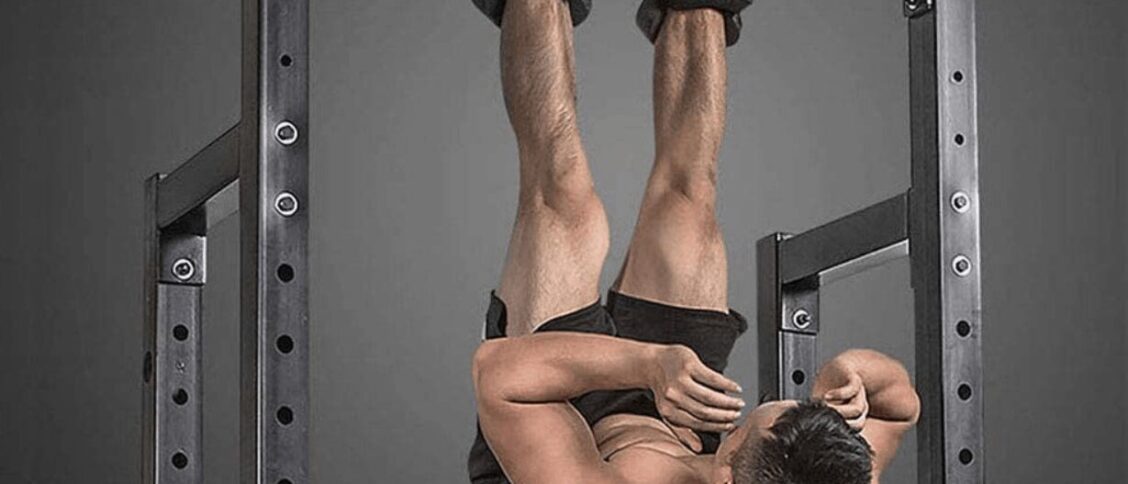
If you’ve ever seen someone hanging upside down from a pull-up bar, you’ve witnessed gravity boots in action. These specialized ankle hooks have been around since the 1970s, yet they remain one of the more polarizing pieces of fitness equipment.
Are they a legitimate tool for spinal decompression and core training, or just a gimmick collecting dust in garage gyms?
This guide breaks down everything you need to know, from how gravity boots work to whether the science actually backs up the claims. For product recommendations, check out the best gravity boots reviewed by the team at TheFitness.Blog.
Key Takeaways
- Gravity boots allow you to perform inversion therapy by hanging upside down from a bar, decompressing the spine and stretching the posterior chain
- Research supports modest benefits for lower back pain relief and temporary spinal decompression
- They are not a medical treatment and should not replace professional care for serious spinal conditions
- Gravity boots offer a unique angle for core exercises like inverted sit-ups and leg raises
- People with high blood pressure, glaucoma, or certain spinal conditions should avoid inversion therapy
- Proper technique and a secure, weight-rated pull-up bar are non-negotiable for safe use
- Results vary significantly between individuals; they work well for some and provide little benefit for others
What Are Gravity Boots?
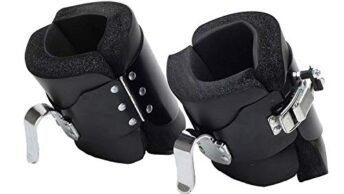
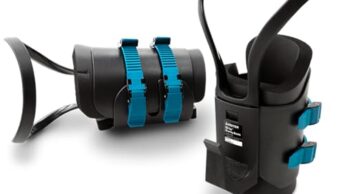
Gravity boots are padded ankle cuffs or hooks that attach to a horizontal bar, allowing you to hang fully inverted using your own body weight. Unlike an inversion table, which tilts you at a controlled angle, gravity boots offer a full 180-degree inversion with greater freedom of movement.
The concept is rooted in inversion therapy, a practice based on the idea that reversing the effects of gravity on the spine can relieve compression, improve circulation, and reduce muscle tension. The boots themselves typically feature:
- A rigid outer shell for structural support
- Thick inner padding to protect the ankle and Achilles tendon
- A locking hook mechanism that attaches to a pull-up bar
- Adjustable straps to fit different ankle sizes
They’re used by athletes, physical therapy patients, and general fitness enthusiasts alike, though for very different purposes.
The Science Behind Inversion Therapy
The spine is under compressive load virtually every waking hour. Gravity constantly pushes down on the intervertebral discs, contributing to disc compression, reduced disc height over time, and in many cases, chronic lower back pain.
Inversion therapy works by reversing that gravitational pull, creating traction along the spine. Studies have shown that even partial inversion can measurably increase the space between vertebrae. A frequently cited study published in Disability and Rehabilitation found that inversion therapy significantly reduced the need for surgery in patients with lumbar disc disease when combined with physiotherapy.
The benefits are real but modest, and they tend to be temporary without consistent use. Think of it less like a cure and more like a daily maintenance habit, similar to stretching or foam rolling.
Gravity Boot Benefits: What the Evidence Says
1. Spinal Decompression and Back Pain Relief
This is the most well-documented benefit. Hanging inverted reduces intradiscal pressure and can provide noticeable relief for people with:
- Lumbar disc compression
- Sciatica-related discomfort
- General lower back tightness from prolonged sitting
The relief is often temporary but can be meaningful as part of a broader recovery or mobility routine.
2. Improved Core Strength
Gravity boots unlock a unique training stimulus. Performing inverted crunches, sit-ups, or leg raises from a fully inverted position dramatically increases the range of motion compared to floor-based equivalents. Your core must work through a longer arc, which translates to greater muscle activation, particularly in the hip flexors and lower abdominals.
If you’re already incorporating Captain’s Chair exercises into your routine, inverted core work with gravity boots is a logical and challenging progression.
3. Hamstring and Hip Flexor Flexibility
Hanging inverted places a passive stretch on the entire posterior chain, including the hamstrings, glutes, and lower back simultaneously. Over time, regular inversion sessions can contribute to improved flexibility in these often chronically tight areas.
4. Improved Circulation and Lymphatic Flow
Reversing the body’s position encourages blood flow toward the upper body and head, and may support lymphatic drainage. While the cardiovascular effects are not dramatic, some users report feeling more mentally alert after short inversion sessions, likely due to increased cerebral blood flow.
5. Mental Decompression and Stress Relief
There’s a subjective but commonly reported benefit: hanging upside down simply feels good. The full-body stretch, the shift in perspective, and the release of spinal tension can have a calming effect. It’s not unlike the relaxation associated with a deep yoga stretch.
Are Gravity Boots Legitimate or Just Hype?
This is the core question, and the honest answer is: it depends on what you’re expecting.
Gravity boots are legitimate in the sense that:
- The physics of spinal decompression through inversion is well-established
- Multiple peer-reviewed studies support their use for back pain management
- They’re used in clinical and rehabilitation settings
- Athletes and coaches have incorporated them into training for decades
They are not legitimate as:
- A cure for serious spinal pathology
- A replacement for medical treatment or physiotherapy
- A significant calorie-burning or cardiovascular tool
The hype tends to come from exaggerated claims about permanent disc repair or dramatic height increases. The reality is more measured: gravity boots are a useful supplementary tool, not a miracle device.
| Claim | Verdict | Evidence Level |
|---|---|---|
| Temporary spinal decompression | Supported | Moderate to Strong |
| Back pain relief | Supported | Moderate |
| Permanent disc repair | Not supported | Weak |
| Increased height | Temporary only | Weak |
| Core strength improvement | Supported | Moderate |
| Improved circulation | Partially supported | Weak to Moderate |
Who Should (and Shouldn’t) Use Gravity Boots
Good Candidates
- People with mild to moderate lower back pain or disc compression
- Athletes looking to add variety to core training
- Individuals with tight hamstrings or hip flexors
- Those already comfortable with pull-up bars and bodyweight training
People Who Should Avoid Inversion
- Anyone with high blood pressure or hypertension, as inversion increases blood pressure in the head
- People with glaucoma or eye pressure issues
- Pregnant women
- Anyone with bone density issues, recent fractures, or joint instability
- People with inner ear conditions or vertigo
Always consult a physician before beginning inversion therapy, especially if you have any pre-existing cardiovascular or spinal conditions.
How to Use Gravity Boots Safely
Getting started with gravity boots requires more care than most fitness equipment. Follow these guidelines:
- Verify your pull-up bar rating — it must support your full body weight with a safety margin
- Start with short sessions — begin with 30 to 60 seconds inverted and gradually increase
- Have a spotter for your first several sessions
- Invert slowly and avoid swinging or jerking into position
- Listen to your body — dizziness, pressure in the head, or discomfort in the ankles are signals to stop
- Don’t invert immediately after eating
Most experienced users work up to sessions of 3 to 5 minutes, repeated a few times per week. Daily use is common for those primarily using them for back maintenance.
Gravity Boots vs. Inversion Tables
| Feature | Gravity Boots | Inversion Table |
|---|---|---|
| Inversion angle | Full 180° | Adjustable (typically 20° to 60°) |
| Exercise capability | High (core exercises possible) | Limited |
| Cost | Lower | Higher |
| Space required | Minimal (needs a pull-up bar) | Significant footprint |
| Ease of use | Moderate learning curve | Beginner-friendly |
| Control over angle | None | Full control |
| Best for | Athletes, experienced users | Beginners, rehabilitation |
For beginners or those primarily focused on back pain relief, an inversion table offers more control and is generally safer to start with. Gravity boots are better suited to those who want to combine inversion with active training.
If you’re building out a home training setup, pairing gravity boots with adjustable dumbbells and a solid weight bench creates a versatile and space-efficient gym that covers strength, mobility, and recovery.
Understanding variable resistance training can also help you think about how gravity boots fit into a broader progressive training system. The inverted position essentially changes the resistance curve of exercises like sit-ups in a meaningful way.
Conclusion
Gravity boots occupy a legitimate but specific niche in the fitness world. The evidence supports their use for temporary spinal decompression, back pain management, and advanced core training.
That said, they are not a cure-all, and they are not suitable for everyone.
Used correctly, with realistic expectations and proper safety precautions, they can be a genuinely valuable addition to a well-rounded training or recovery routine. Used recklessly or with inflated expectations, they offer little benefit and carry real risk.
The key is approaching them as a tool, not a treatment, and always prioritizing safety over novelty.
Frequently Asked Questions
How long should you hang in gravity boots?
Beginners should start with 30 to 60 seconds per session and gradually work up to 3 to 5 minutes over several weeks. Most users find 2 to 3 sessions per week sufficient for back maintenance benefits.
Do gravity boots actually decompress the spine?
Yes, research confirms that full inversion measurably increases intervertebral disc space and reduces spinal compression. However, the effect is temporary and returns to baseline after returning to an upright position.
Can gravity boots help with sciatica?
Some people with sciatica caused by disc compression report relief from inversion therapy. However, results vary widely and inversion is not appropriate for all causes of sciatica, so consult a physician before trying it.
Are gravity boots safe for beginners?
They carry a moderate learning curve and some inherent risk. Beginners should use a spotter, start with very short sessions, and ensure their pull-up bar is properly rated for the load.
How are gravity boots different from an inversion table?
Gravity boots allow full 180-degree inversion and enable active exercises like inverted sit-ups, while inversion tables provide partial, adjustable inversion with more control, making tables generally more beginner-friendly and boots better suited to experienced users.
This article was last updated on March 9, 2026 .