Dip bars are one of the most underrated pieces of equipment in any gym or home setup. Simple in design, powerful in application — a pair of parallel bars can unlock a surprisingly wide range of upper body and core movements that challenge even seasoned lifters. Whether you’re building a home gym on a budget or looking to add variety to your training routine, dip bar exercises deserve a spot in your program.
This guide walks you through seven of the best dip bar exercises, explains how to perform each one correctly, and shows you why this humble piece of equipment punches well above its weight.
Key Takeaways
- Dip bars support a wide range of exercises beyond the classic tricep dip, including push-up variations, core work, and leg raises
- They are suitable for all fitness levels, from beginners using assisted variations to advanced athletes adding weight
- Dip bar exercises are highly effective for building the chest, triceps, shoulders, and core
- Proper form is essential — poor technique can place unnecessary stress on the shoulders and wrists
- Dip bars are a cost-effective, space-efficient training tool ideal for home gyms
- Many dip bar movements can be progressed or regressed to match your current strength level
- Combining several of these exercises into a circuit creates an efficient, equipment-minimal workout
What Are Dip Bars and Why Use Them?
Dip bars are parallel horizontal bars, typically set at roughly hip to waist height, that allow you to support your bodyweight with your hands while your body hangs or moves freely beneath. They come in freestanding, wall-mounted, and floor-based designs.
Their appeal lies in their versatility. Unlike fixed machines that lock you into a single movement pattern, dip bars allow your body to move naturally through space, engaging stabilizer muscles and improving functional strength. They’re also a fantastic companion to quick workouts at home when you want effective training without a full gym setup.
The 7 Best Dip Bar Exercises
1. Tricep Dips
The foundational dip bar movement, tricep dips are one of the most effective exercises for building the back of the upper arm. They also recruit the anterior deltoids and lower chest as secondary muscles.
How to do it:
- Grip both bars with your palms facing inward
- Press yourself up so your arms are fully extended and your body is suspended
- Lower your body by bending your elbows until your upper arms are roughly parallel to the floor
- Push back up to the starting position
Key tips: Keep your torso upright to bias the triceps. Leaning forward shifts emphasis toward the chest. Avoid flaring your elbows excessively outward.
Progressions: Add a weight belt or hold a dumbbell between your feet to increase resistance.
2. Chest Dips
A slight adjustment in body position turns the tricep dip into a powerful chest-focused movement. Chest dips are one of the best cable exercises for a solid chest alternatives you can do with just bodyweight.
How to do it:
- Start in the same position as a tricep dip
- Lean your torso forward at roughly a 30–45 degree angle
- Allow your elbows to flare slightly outward as you descend
- Lower until you feel a stretch across your chest, then press back up
Key tips: Don’t go too deep too soon — excessive depth with poor shoulder mobility can strain the shoulder joint. Build range of motion gradually.
3. L-Sit Hold
The L-sit is a static hold that builds extraordinary core strength, hip flexor endurance, and shoulder stability. It looks deceptively simple but is genuinely challenging.
How to do it:
- Support yourself on the bars with arms fully extended
- Raise both legs out in front of you until they are parallel to the floor
- Hold this position for as long as possible while maintaining straight legs and a neutral spine
Progressions: If a full L-sit is too difficult, start by tucking one or both knees to your chest before gradually extending your legs.
4. Knee Raises and Leg Raises
If you enjoy captain’s chair exercises for core work, you’ll find dip bar leg raises equally effective. These movements target the lower abdominals, hip flexors, and obliques.
How to do it:
- Support yourself on the bars with arms extended
- For knee raises: pull your knees toward your chest, then lower with control
- For leg raises: keep your legs straight and raise them to hip height or higher
Key tips: Avoid swinging. The slower and more controlled the movement, the more your abs have to work. Add a slight posterior pelvic tilt at the top for maximum ab engagement.
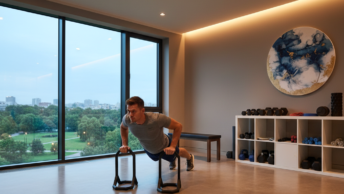
5. Dip Bar Push-Ups
Elevating your hands on dip bars during push-ups increases the range of motion compared to floor push-ups, allowing your chest to drop lower and creating a deeper stretch through the pectoral muscles.
How to do it:
- Place your hands on the bars and extend your legs behind you in a push-up position
- Lower your chest below bar level, feeling a stretch in your chest
- Press back up to full arm extension
Key tips: Keep your core tight and your body in a straight line from head to heel. This variation also places more demand on the serratus anterior, improving shoulder blade control.
6. Bulgarian Split Squat (Using Bars for Balance)
Dip bars aren’t exclusively for upper body work. Using them as a balance aid, you can perform a Bulgarian split squat — one of the most effective single-leg lower body exercises available.
How to do it:
- Stand facing away from the bars
- Place one foot behind you on one of the bars
- Lower your back knee toward the floor while keeping your front shin vertical
- Drive through your front heel to return to standing
This pairs well with other lower body movements if you’re interested in alternatives to lunges that still challenge balance and unilateral strength.
7. Dip Bar Rows (Inverted Rows)
By positioning a single dip bar at a lower height — or by using a freestanding unit and lying beneath it — you can perform inverted rows that target the back, biceps, and rear deltoids.
How to do it:
- Position yourself beneath the bar with your chest facing upward
- Grip the bar with an overhand grip, arms extended, heels on the floor
- Pull your chest up toward the bar, squeezing your shoulder blades together
- Lower with control
Key tips: The more horizontal your body, the harder the movement. Elevate your feet to increase difficulty.
Dip Bar Exercise Comparison Table
| Exercise | Primary Muscles | Difficulty | Equipment Needed |
|---|---|---|---|
| Tricep Dips | Triceps, Anterior Deltoid | Beginner–Intermediate | Dip Bars |
| Chest Dips | Pectorals, Triceps | Intermediate | Dip Bars |
| L-Sit Hold | Core, Hip Flexors | Advanced | Dip Bars |
| Knee/Leg Raises | Abs, Hip Flexors | Beginner–Intermediate | Dip Bars |
| Dip Bar Push-Ups | Chest, Serratus Anterior | Beginner | Dip Bars |
| Bulgarian Split Squat | Quads, Glutes, Hamstrings | Intermediate | Dip Bars + Space |
| Inverted Rows | Back, Biceps, Rear Delts | Beginner–Intermediate | Dip Bars |
Sample Dip Bar Workout
| Exercise | Sets | Reps / Duration |
|---|---|---|
| Chest Dips | 3 | 8–12 reps |
| Tricep Dips | 3 | 10–15 reps |
| Knee Raises | 3 | 12–15 reps |
| Dip Bar Push-Ups | 2 | 10–15 reps |
| L-Sit Hold | 3 | 10–20 seconds |
| Inverted Rows | 3 | 10–12 reps |
Rest 60–90 seconds between sets. This circuit covers chest, triceps, back, shoulders, and core — a well-rounded upper body session using nothing but a set of bars.
Tips for Getting the Most Out of Dip Bar Training
- Warm up your shoulders and wrists before any session — these joints take the brunt of the load
- Control the eccentric (lowering) phase of every rep to maximize muscle tension and reduce injury risk
- Progress gradually — add volume before adding load
- Pair with pulling movements like rows or pull-ups to maintain shoulder balance and prevent overuse injuries
- Track your reps and holds — small improvements over time add up to significant strength gains
If you’re fueling your training properly, don’t overlook nutrition. Reviewing the best post-workout meals for muscle gain can help you recover faster and make better use of your training sessions.
Conclusion
Dip bars offer far more than a single exercise. From chest and tricep development to core strength and even lower body work, these seven movements demonstrate just how versatile a simple piece of equipment can be. Whether you’re a beginner working on your first bodyweight dip or an advanced athlete chasing a clean L-sit, there’s always a progression to work toward. Start with the movements that match your current level, focus on quality over quantity, and build from there.
FAQs
Are dip bars good for beginners?
Yes — many dip bar exercises can be modified for beginners. Knee raises, dip bar push-ups, and assisted dips using a resistance band are all accessible starting points that build strength progressively.
How often should I train with dip bars?
Two to three times per week is a solid starting point for most people. Allow at least 48 hours of recovery between sessions that target the same muscle groups.
Can dip bar exercises build muscle effectively?
Absolutely. Bodyweight exercises performed with progressive overload — increasing reps, adding weight, or slowing tempo — are well-documented to stimulate muscle growth, particularly in the chest, triceps, and core.
Are dip bars bad for your shoulders?
They can be if your form is poor or you go too deep without adequate mobility. Keeping your shoulder blades depressed and retracted, and not descending past a comfortable range, significantly reduces shoulder strain.
What’s the difference between tricep dips and chest dips?
The primary difference is torso angle. An upright torso targets the triceps more directly, while leaning forward shifts the emphasis to the pectoral muscles. Both variations use the same equipment and starting position.
This article was last updated on March 16, 2026 .