Plyometric training has long been a staple in the programs of athletes, coaches, and serious fitness enthusiasts. But it is not just for elite performers. Whether you want to build explosive power, burn more calories in less time, or break through a training plateau, plyometrics can deliver results that traditional strength training alone cannot. If you have been relying only on weights and steady-state cardio, adding plyometric exercises to your routine could be the shift that finally moves the needle.
If you are building out a home setup to support your training, check out this guide to quick workouts at home for ideas on how to structure sessions without a gym.
Key Takeaways
- Plyometric exercises train your muscles to generate maximum force in minimal time, improving explosive power and athletic performance
- They are effective for fat loss because they elevate heart rate quickly and burn significant calories
- Beginners should build a strength base before jumping into high-intensity plyometric work
- Most plyometric exercises require little to no equipment and can be done at home or in the gym
- Proper landing mechanics are essential to reduce injury risk
- Plyometrics can complement resistance training programs by improving speed, agility, and coordination
- Progressive overload still applies, start with lower-intensity variations and increase difficulty over time
What Are Plyometric Exercises?
Plyometrics, sometimes called “jump training,” are exercises that involve rapid stretching and contracting of muscles to produce explosive movements. The underlying mechanism is called the stretch-shortening cycle (SSC). When a muscle rapidly lengthens (eccentric phase) and then immediately shortens (concentric phase), it generates more force than a standard contraction alone.
This is why athletes who train with plyometrics tend to jump higher, sprint faster, and change direction more efficiently. But beyond sport performance, plyometric training improves cardiovascular fitness, burns a high number of calories per session, and builds functional strength that carries over into everyday movement.
Who Should Do Plyometric Training?
Plyometrics are appropriate for most healthy adults, but they are not ideal as a starting point for complete beginners. Before adding high-impact jump training, you should be able to:
- Perform a bodyweight squat with solid form
- Land softly from a small jump without knee caving
- Complete basic cardio without significant fatigue
- Move through a full range of motion without pain
Once those boxes are checked, you are ready to start incorporating the exercises below.
The 8 Plyometric Exercises You Need to Add to Your Routine
1. Box Jumps
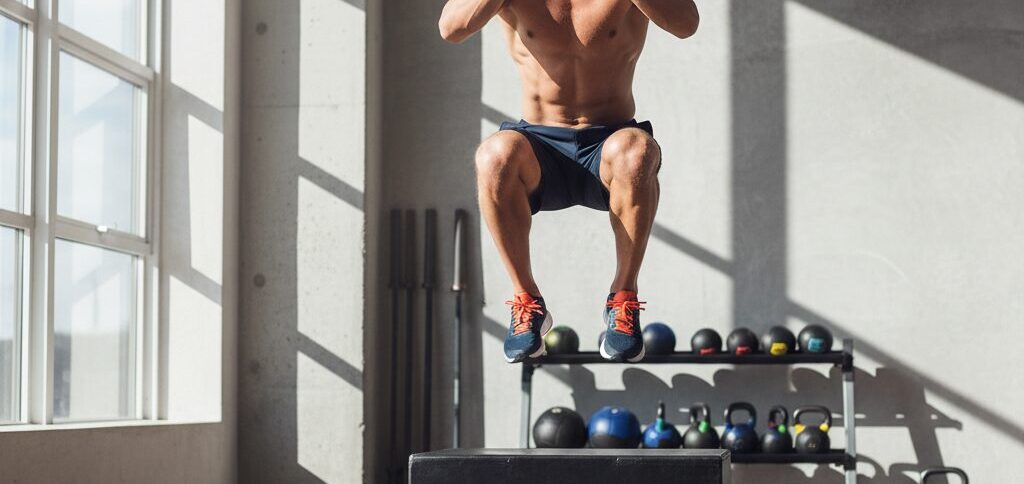
Box jumps are one of the most well-known plyometric movements for good reason. They develop lower-body explosiveness, improve vertical jump height, and train your body to absorb force safely on landing.
How to do it: Stand in front of a sturdy box (start with 12 to 18 inches). Hinge at the hips, swing your arms back, then explode upward, driving your arms forward. Land softly with both feet flat on the box and knees slightly bent. Step down rather than jumping down to protect your joints.
Primary muscles: Glutes, quads, hamstrings, calves
2. Squat Jumps
Squat jumps are a beginner-friendly entry point into plyometric training. They require no equipment and directly build explosive leg power.
How to do it: Lower into a squat position with feet shoulder-width apart. From the bottom of the squat, explode upward as high as possible. Land softly, immediately lowering back into the squat to begin the next rep.
Primary muscles: Quads, glutes, calves
3. Lateral Bounds
Also known as skater jumps, lateral bounds train single-leg power, lateral stability, and hip abductor strength. They are excellent for improving agility and are commonly used in sports conditioning.
How to do it: Stand on one leg, then drive off that leg laterally, landing on the opposite foot. Hold the landing briefly to control your balance before bounding back the other way. Keep your chest up and core engaged throughout.
Primary muscles: Glutes, hip abductors, quads, calves
4. Depth Drops
Depth drops are a lower-intensity plyometric drill focused on teaching proper landing mechanics. They are an ideal starting point before progressing to depth jumps.
How to do it: Stand on a box and step off (do not jump). Focus entirely on landing softly with both feet simultaneously, knees tracking over toes, and hips absorbing the impact. No jumping involved at this stage.
Primary muscles: Quads, glutes, hamstrings (eccentric loading)
5. Broad Jumps
Broad jumps develop horizontal power, making them particularly useful for sprinters and anyone looking to improve speed. They also engage the core heavily to maintain stability during the jump.
How to do it: Stand with feet shoulder-width apart. Bend your knees, swing your arms back, then explode forward as far as possible. Land with both feet simultaneously, absorbing the impact by bending your knees. Try to stick the landing before resetting.
Primary muscles: Glutes, hamstrings, quads, core
6. Clap Push-Ups
Plyometric training is not just for the lower body. Clap push-ups develop explosive upper-body power, targeting the chest, shoulders, and triceps in a way that standard push-ups simply cannot replicate.
How to do it: Start in a standard push-up position. Lower your chest to the floor, then press explosively hard enough to lift your hands off the ground. Clap mid-air and return your hands to the floor to absorb the landing. Beginners can modify by doing explosive push-ups without the clap.
Primary muscles: Chest, shoulders, triceps
7. Tuck Jumps
Tuck jumps are a high-intensity plyometric that challenges both explosive power and core control. They are commonly used in conditioning circuits and athletic training programs.
How to do it: From a standing position, jump as high as possible while driving your knees toward your chest at the peak. Land softly and immediately repeat. The goal is minimal ground contact time between reps.
Primary muscles: Quads, hip flexors, core, calves
8. Plyo Push-Up to Lateral Movement
This combination movement blends upper-body plyometrics with lateral agility, making it a full-body challenge that improves coordination and cardiovascular capacity simultaneously.
How to do it: Perform an explosive push-up, then as you come up, shuffle your hands laterally one step and repeat. Alternate directions each rep. This is an advanced variation best suited to those with a solid push-up base.
Primary muscles: Chest, shoulders, triceps, core, stabilizers
How to Program Plyometric Exercises
Knowing which exercises to do is only half the equation. Programming them correctly is what determines your results.
| Training Level | Frequency | Volume Per Session | Rest Between Sets |
|---|---|---|---|
| Beginner | 1-2x per week | 3 sets of 5-8 reps | 90-120 seconds |
| Intermediate | 2-3x per week | 3-4 sets of 8-12 reps | 60-90 seconds |
| Advanced | 3-4x per week | 4-5 sets of 10-15 reps | 45-60 seconds |
Plyometrics pair well with resistance training. Many coaches program them at the start of a session when the nervous system is fresh, or as a separate power-focused day. They also work well as a finisher in fat-loss circuits. For women specifically looking to maximize calorie burn, the fast fat loss gym workout for ladies offers structured circuit ideas that complement plyometric work.
Comparing Plyometric Exercises by Intensity and Equipment Needed
| Exercise | Intensity Level | Equipment Needed | Best For |
|---|---|---|---|
| Squat Jumps | Low-Medium | None | Beginners, fat loss |
| Lateral Bounds | Medium | None | Agility, hip strength |
| Broad Jumps | Medium | None | Horizontal power, sprinters |
| Tuck Jumps | High | None | Conditioning, core control |
| Box Jumps | Medium-High | Plyo box | Vertical power, athletes |
| Depth Drops | Low | Plyo box | Landing mechanics, beginners |
| Clap Push-Ups | Medium | None | Upper-body power |
| Plyo Push-Up Lateral | High | None | Full-body conditioning |
Safety Tips for Plyometric Training
Plyometrics carry a higher injury risk than low-impact training if performed carelessly. Follow these guidelines to train smart:
- Warm up thoroughly before any plyometric session. Include dynamic movements like leg swings, hip circles, and light jogging
- Prioritize landing mechanics over height or distance. A soft, controlled landing protects your knees and ankles
- Avoid training on hard surfaces when possible. Grass, rubber flooring, or sprung gym floors are ideal
- Do not train plyometrics when fatigued. These are neurologically demanding exercises that require full attention
- Progress gradually. Master lower-intensity variations before advancing
If you are also incorporating resistance training tools like adjustable dumbbells into your home gym, you can pair strength sets with plyometric intervals for a well-rounded session.
Tracking your progress matters too. Using one of the best small fitness trackers can help you monitor heart rate, calories burned, and recovery between plyometric sessions.
Conclusion
Plyometric exercises are one of the most effective tools available for building explosive power, improving athletic performance, and accelerating fat loss. The eight exercises covered here range from beginner-friendly options like squat jumps and depth drops to advanced full-body combinations that challenge even experienced athletes. The key is starting where you are, mastering your landing mechanics, and progressing consistently over time. Add two or three of these movements to your current program and you will likely notice improvements in strength, speed, and conditioning within a few weeks.
FAQs
Are plyometric exercises good for weight loss?
Yes. Plyometrics are high-intensity movements that elevate your heart rate quickly and burn a significant number of calories in a short period. They also increase post-exercise oxygen consumption, meaning you continue burning calories after your session ends.
How often should I do plyometric training?
Most people benefit from one to three plyometric sessions per week, depending on their fitness level. Because they are neurologically demanding, adequate recovery between sessions is essential to avoid overtraining.
Can beginners do plyometric exercises?
Beginners can do plyometrics, but they should start with lower-intensity variations like squat jumps and depth drops. Building a base level of strength and learning proper landing mechanics first significantly reduces injury risk.
Do plyometric exercises build muscle?
Plyometrics build functional power and can contribute to muscle development, particularly in the legs and glutes. However, they are not a replacement for progressive resistance training if hypertrophy is your primary goal.
What is the best surface for plyometric training?
Rubber flooring, grass, or sprung gym floors are ideal for plyometric training. Avoid concrete or hard tile surfaces, which increase impact stress on your joints and raise the risk of injury over time.
This article was last updated on March 17, 2026 .