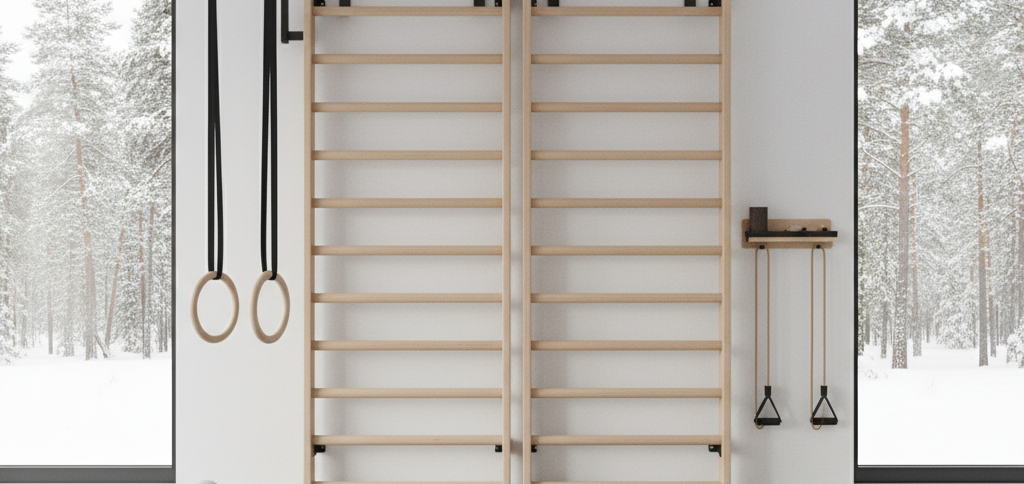
Nala bars are a branded version of the classic Swedish wall bar, reimagined for modern home fitness. If you’ve seen them on social media or heard about them in yoga and mobility communities, you might be wondering what exactly they are and whether they’re worth the attention.
This article breaks down what Nala bars are, how they function, and what makes Swedish wall bars an effective training tool for a wide range of fitness goals.
Quick Answer
Nala bars are a type of Swedish wall bar (also called stall bars) designed for home use, focused on mobility, stretching, core strength, and bodyweight training. They mount to a wall and feature horizontal rungs at varying heights, allowing users to perform a wide range of exercises and passive stretches with adjustable support.
Key Takeaways
- Nala bars are a branded Swedish wall bar product designed for home fitness and mobility training
- Swedish wall bars have been used in physical therapy, gymnastics, and athletic training for over 200 years
- The ladder-style design allows for exercises targeting the core, back, shoulders, hips, and hamstrings
- They are suitable for beginners through advanced athletes and are especially popular in yoga and stretching communities
- Wall bars require minimal floor space because they mount vertically to the wall
- Most quality wall bars support users up to 265 lbs and are built from hardwood and steel components
What Are Nala Bars?
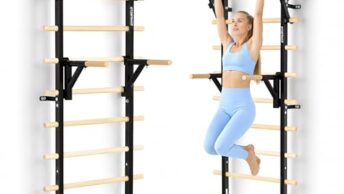
Nala bars are a specific brand of Swedish wall bars that have gained popularity in the home fitness and wellness space. The product is marketed toward people interested in improving flexibility, spinal decompression, core strength, and overall mobility.
The name “Nala bars” refers to the brand, but the underlying equipment is a Swedish ladder, also called a stall bar. These are wall-mounted wooden ladder structures with multiple horizontal rungs spaced at consistent intervals from floor to ceiling height.
What Is a Swedish Wall Bar?
A Swedish wall bar (or stall bar) is a piece of exercise equipment consisting of two vertical posts connected by evenly spaced horizontal rungs. It was developed in Sweden in the early 1800s by gymnastics pioneer Pehr Henrik Ling and has remained a staple in gymnastics halls, physical therapy clinics, and functional fitness spaces ever since.
The design is intentionally simple. Rungs are placed at different heights to accommodate users of varying sizes and to allow different exercise positions. The wall-mounted setup means the equipment takes up almost no floor space, making it practical for home gyms of any size.
If you’re exploring a budget](https://www.thefitness.blog/how-to-build-a-home-gym-on-a-budget-a-step-by-step-guide/) for ideas on equipment selection and layout.
What Can You Do on Nala Bars or Swedish Wall Bars?
The versatility of wall bars is one of their biggest advantages. A single piece of equipment supports dozens of exercises across multiple fitness categories.
Stretching and Mobility
- Hamstring and hip flexor stretches using the rungs as a fixed anchor
- Thoracic spine extension by draping the back over a lower rung
- Shoulder and lat stretches with overhead grip holds
- Passive spinal decompression by hanging from upper rungs
Core and Strength Training
- Hanging leg raises and tuck holds
- L-sits and hollow body holds
- Inverted rows using lower rungs
- Pike push-ups with feet elevated on a rung
Gymnastics and Bodyweight Progressions
Wall bars are a foundational tool in gymnastics conditioning. They allow athletes to develop the positional strength needed for handstands, levers, and other advanced movements.
For a broader look at bodyweight training tools, 7 great dip bar exercises you should try covers another versatile piece of equipment that pairs well with wall bars.
How Are Nala Bars Different From a Standard Pull-Up Bar?
A standard pull-up bar offers one fixed grip position. Swedish wall bars like Nala bars offer multiple rung heights, which dramatically expands the range of exercises available.
| Feature | Pull-Up Bar | Swedish Wall Bar |
|---|---|---|
| Grip positions | 1 fixed height | Multiple heights (floor to ceiling) |
| Stretching use | Limited | Extensive |
| Core exercise variety | Moderate | High |
| Floor space required | Minimal | Minimal (wall-mounted) |
| Skill level range | Beginner to advanced | Beginner to advanced |
The multi-rung design makes wall bars significantly more versatile for mobility and flexibility work, which is why they’ve become popular in yoga and functional movement communities.
Who Are Nala Bars Best Suited For?
Nala bars and Swedish wall bars in general are well-suited for a wide range of users.
- Yoga practitioners looking to deepen stretches and improve spinal mobility
- Athletes and gymnasts building foundational bodyweight strength
- Physical therapy patients using wall bars for guided rehabilitation exercises
- Home gym users who want a space-efficient multi-use training tool
- People with desk jobs who want to counteract the effects of prolonged sitting through active stretching
They are not ideal as a standalone tool for heavy those building out a complete home training setup, the 10 best adjustable dumbbells for home gym is a useful companion resource.
What Should You Look for in a Swedish Wall Bar?
Whether you’re considering Nala bars or any other brand, the key quality indicators are consistent across products.
- Wood quality: New Zealand pine and birch are common choices, offering a balance of durability and grip comfort
- Rung spacing and range: Look for rungs that start low (around 11 inches) and reach at least 78 inches high
- Weight capacity: A minimum of 265 lbs is standard for safe home use
- **Steel upr complete guide to wall bars for fitness](https://www.thefitness.blog/swedish-ladder-the-ultimate-guide-to-wall-bars-for-fitness/) covers the topic in full detail.
Common Misconceptions About Wall Bars
They’re only for gymnasts. This is one they mount directly to the wall, they take up almost no floor footprint. The wall surface itself becomes the training space.
They’re difficult to install. Most modern wall bar products come with detailed instructions and standard hardware. Installation typically takes under an hour with basic tools.
Conclusion
Nala bars are a branded Swedish wall bar built for home use, with a focus on mobility, stretching, and bodyweight training. The underlying design, the Swedish stall bar, has been a trusted fitness tool for over two centuries across gymnastics, physical therapy, and functional training.
If you’re looking for a space-efficient way to improve flexibility, decompress the spine, and build core strength at home, wall bars are one of the most practical and versatile options available.
FAQs
What are Nala bars used for?
Nala bars are used for stretching, spinal decompression, core training, and bodyweight exercises. They are especially popular for yoga-based mobility work and flexibility improvement.
Are Nala bars the same as Swedish wall bars?
Yes, Nala bars are a branded version of the traditional Swedish wall bar, also known as a stall bar. The core design and function are the same across brands.
How much wall space do you need for a Swedish wall bar?
Most Swedish wall bars are of roughly 3 feet wide and 7 feet tall, with no obstructions.
Can beginners use wall bars?
Yes. Wall bars are suitable for all fitness levels. Beginners typically start with passive stretches and basic core holds, then progress to more demanding movements over time.
Do Swedish wall bars damage walls?
When installed correctly with proper anchoring into wall studs, Swedish wall bars do not damage walls beyond the mounting holes. Most installation hardware is designed to distribute load safely across multiple anchor points.
This article was last updated on August 31, 2026 .