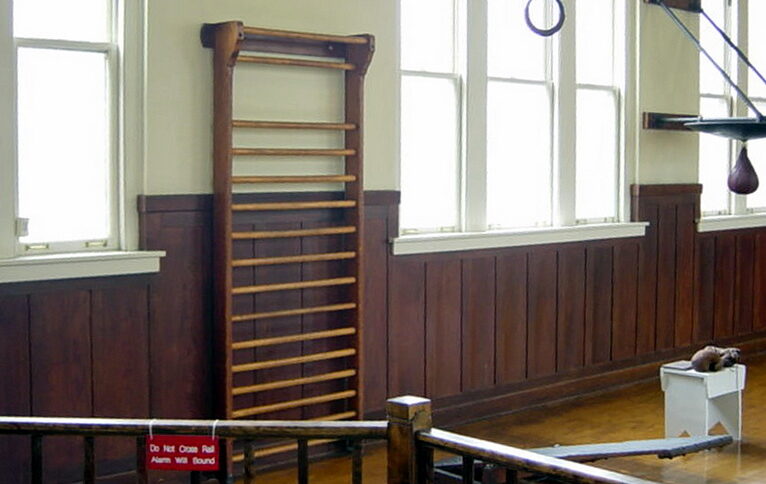
The Swedish ladder, also known as wall bars or stall bars, is a versatile piece of fitness equipment that has been a staple in European gymnastics and physical education for over a century. These wall-mounted wooden or metal bars offer an incredible range of exercise possibilities for strength training, flexibility, and rehabilitation. Originally developed in Sweden during the 19th century by Pehr Henrik Ling (the father of Swedish gymnastics), these simple yet effective training tools have stood the test of time and continue to be valuable assets in modern fitness facilities, physical therapy clinics, and home gyms worldwide.
What is a Swedish Ladder?
A Swedish ladder consists of multiple horizontal rungs attached to vertical supports that are mounted securely to a wall. Traditionally made from wood, modern versions also come in metal and can feature additional attachments for expanded exercise options.
Standard Design Components
Core Structure:
- Horizontal rungs: Usually 10-14 bars spaced 4-6 inches apart
- Vertical support beams: Made from high-grade hardwood (beech, oak) or steel
- Heavy-duty wall mounting brackets: Industrial-grade hardware capable of supporting 300-500+ lbs
- Safety features: Reinforced joints, anti-slip coating, rounded edges
- Dimensions: Typically 7-8 feet tall, 3 feet wide, 8-12 inches deep from wall
Optional Accessories and Add-ons:
- Pull-up bars (mounted on top rungs)
- Dip station attachments
- Gymnastic rings mounting points
- Resistance band anchor points
- Padded back support for inverted exercises
- Adjustable bench that hooks onto rungs
- Incline/decline board attachments
Historical Background
The Swedish ladder was invented in the early 1800s as part of the Swedish gymnastics movement. Pehr Henrik Ling developed these wall bars as a tool for medical gymnastics and rehabilitation. The design quickly spread throughout Europe and became standard equipment in schools, military training facilities, and hospitals. Today, Swedish ladders remain popular in Scandinavia, Germany, Poland, and Russia, and are experiencing a renaissance in North America as functional fitness gains popularity.
Benefits of Using a Swedish Ladder
Swedish ladders offer numerous advantages for fitness enthusiasts of all levels, from beginners to advanced athletes.
1. Versatility in Training
The Swedish ladder enables over 100 different exercises, making it one of the most versatile pieces of equipment available. Unlike machines that isolate specific muscles, wall bars allow for compound, functional movements that engage multiple muscle groups simultaneously.
Exercise Categories:
- Upper body strength (pull-ups, rows, push-ups)
- Core and abdominal training (leg raises, planks, twists)
- Lower body development (squats, lunges, calf raises)
- Flexibility and stretching (hip openers, hamstring stretches, spinal decompression)
- Rehabilitation and physical therapy movements
- Advanced calisthenics progressions
- Balance and coordination drills
- Plyometric exercises
2. Space Efficiency
Unlike bulky gym equipment, Swedish ladders mount directly to the wall, making them perfect for home gyms with limited space.
Space Comparison Table:
| Equipment | Floor Space Required | Wall Space | Height | Best For |
|---|---|---|---|---|
| Swedish Ladder | Minimal (3′ x 3′ clearance) | 3′ wide x 8′ tall | 7-8 feet | Small spaces, apartments |
| Power Rack | 4′ x 6′ footprint | None | 7-8 feet | Dedicated home gyms |
| Smith Machine | 5′ x 7′ footprint | None | 7 feet | Large home gyms |
| Cable Machine | 4′ x 5′ footprint | Optional | 7-8 feet | Medium to large spaces |
| Pull-up Tower | 3′ x 4′ footprint | None | 7-8 feet | Medium spaces |
The vertical design maximizes floor space utilization while providing a comprehensive workout station. This makes Swedish ladders ideal for apartments, small home gyms, garage setups, or multi-purpose rooms.
3. Full-Body Workout Capability
A single Swedish ladder can replace multiple pieces of equipment:
Equipment Replacement Value:
| Traditional Equipment | Swedish Ladder Alternative | Cost Savings |
|---|---|---|
| Pull-up bar ($50-200) | Built-in pull-up functionality | Included |
| Dip station ($100-300) | Dip attachment or ring dips | $50-100 |
| Ab wheel ($20-40) | Hanging core exercises | Included |
| Stretching straps ($15-30) | Built-in stretching support | Included |
| Back extension bench ($150-400) | Inverted back extensions | Included |
| Leg raise station ($200-500) | Hanging leg raises | Included |
| Total Savings | $535-1,570 |
4. Rehabilitation and Physical Therapy
The ladder’s design makes it ideal for rehabilitation exercises and stretching routines. Physical therapists and chiropractors commonly use Swedish ladders for:
Therapeutic Applications:
| Condition | Swedish Ladder Benefits | Recommended Exercises |
|---|---|---|
| Lower Back Pain | Spinal decompression, core strengthening | Hanging decompression, pelvic tilts |
| Poor Posture | Spine alignment, thoracic mobility | Wall angels, scapular retractions |
| Frozen Shoulder | Gentle range of motion work | Assisted shoulder stretches, wall climbs |
| Hip Tightness | Deep hip flexor and hamstring stretches | Elevated leg stretches, hip openers |
| Knee Rehabilitation | Controlled range of motion exercises | Assisted squats, leg raises |
| Balance Issues | Stable support for balance training | Single-leg stands, controlled movements |
5. Progressive Overload and Scalability
Swedish ladders accommodate all fitness levels through adjustable difficulty:
Progression Methods:
- Leverage adjustment: Move hands/feet to different rungs to increase or decrease difficulty
- Range of motion: Partial movements for beginners, full ROM for advanced
- Tempo manipulation: Slow eccentric movements increase difficulty
- Added resistance: Use weight vests, resistance bands, or ankle weights
- Advanced variations: Progress from assisted to unassisted exercises
- Unilateral training: Single-arm or single-leg variations
6. Joint-Friendly Training
Unlike heavy barbell exercises or high-impact movements, Swedish ladder exercises are generally low-impact and joint-friendly:
- Decompression benefits: Hanging exercises decompress the spine
- Controlled movements: The ladder provides stability and control
- Adjustable intensity: Easy to modify exercises for joint limitations
- Natural movement patterns: Exercises follow natural biomechanics
- Reduced compressive forces: Bodyweight focus minimizes joint stress
Comprehensive Swedish Ladder Exercise Library
Upper Body Exercises
Pull and Back Exercises:
| Exercise | Primary Muscles | Difficulty | Reps/Sets | Progression |
|---|---|---|---|---|
| Assisted Pull-ups | Lats, biceps, rear delts | Beginner | 3 x 5-8 | Reduce foot support gradually |
| Inverted Rows | Mid-back, rhomboids, biceps | Beginner-Intermediate | 3 x 8-12 | Lower body position |
| Standard Pull-ups | Lats, biceps, core | Intermediate | 3 x 6-10 | Add weight or slow tempo |
| Scapular Pull-ups | Scapular stabilizers, traps | Beginner | 3 x 10-15 | Increase hold time |
| Hanging Spine Stretch | Spinal decompression, lats | Recovery | 3 x 30-60 sec | Increase duration |
| Archer Pull-ups | Unilateral lat, bicep | Advanced | 3 x 4-6 each | Progress to one-arm |
Push Exercises:
| Exercise | Primary Muscles | Difficulty | Reps/Sets | Key Points |
|---|---|---|---|---|
| Incline Push-ups | Chest, triceps, shoulders | Beginner | 3 x 10-15 | Hands on higher rungs |
| Decline Push-ups | Upper chest, shoulders | Intermediate | 3 x 8-12 | Feet elevated on rungs |
| Pike Push-ups | Shoulders, upper chest | Intermediate | 3 x 8-10 | Progress to handstand |
| Pseudo Planche Push-ups | Shoulders, chest, core | Advanced | 3 x 5-8 | Hands on low rungs |
| Dip Variations | Triceps, chest, shoulders | Intermediate-Advanced | 3 x 6-12 | Requires dip attachment |
Core and Abdominal Exercises
Hanging Core Movements:
| Exercise | Primary Muscles | Difficulty | Reps/Sets | Common Mistakes |
|---|---|---|---|---|
| Hanging Knee Raises | Lower abs, hip flexors | Beginner | 3 x 10-15 | Swinging, using momentum |
| Hanging Leg Raises | Entire core, lower abs | Intermediate | 3 x 8-12 | Not keeping legs straight |
| Toes to Bar | Full core, hip flexors, lats | Advanced | 3 x 6-10 | Kipping too much |
| Windshield Wipers | Obliques, core rotation | Advanced | 3 x 6-8 each | Going too fast |
| L-Sit Hold | Core, hip flexors, shoulders | Intermediate-Advanced | 3 x 20-45 sec | Not keeping legs parallel |
| Hanging Oblique Raises | Obliques, side core | Intermediate | 3 x 10-12 each | Insufficient side bend |
| Dragon Flag Progressions | Entire core, shoulders | Advanced | 3 x 5-8 | Sagging hips |
Supported Core Exercises:
- Plank variations (hands or feet on rungs): 3 x 30-60 seconds
- Side planks (elevated): 3 x 30-45 seconds each side
- Mountain climbers (hands on rungs): 3 x 20-30 reps
- Ab wheel rollouts (using rungs for support): 3 x 8-12 reps
Lower Body Exercises
Leg Strengthening:
| Exercise | Primary Muscles | Difficulty | Reps/Sets | Benefits |
|---|---|---|---|---|
| Assisted Pistol Squats | Quads, glutes, core balance | Intermediate | 3 x 6-8 each | Unilateral strength |
| Bulgarian Split Squats | Quads, glutes, hamstrings | Intermediate | 3 x 10-12 each | Single-leg power |
| Elevated Calf Raises | Calves (gastrocnemius, soleus) | Beginner | 3 x 15-20 | Full ROM possible |
| Wall Sits | Quads, glutes, endurance | Beginner-Intermediate | 3 x 45-90 sec | Isometric strength |
| Nordic Hamstring Curls | Hamstrings, lower back | Advanced | 3 x 5-8 | Eccentric strength |
| Supported Lunges | Quads, glutes, balance | Beginner-Intermediate | 3 x 10-12 each | Stability and control |
| Single-Leg Romanian Deadlift | Hamstrings, glutes, balance | Intermediate | 3 x 8-10 each | Hip hinge pattern |
Flexibility and Mobility Work
Stretching and Mobility Exercises:
| Stretch/Mobility Exercise | Target Area | Hold Time | Frequency | Notes |
|---|---|---|---|---|
| Hanging Spinal Decompression | Entire spine, shoulders | 30-60 sec | Daily | Gentle, relaxed hang |
| Elevated Hamstring Stretch | Hamstrings, lower back | 30-45 sec each | Daily | Keep back straight |
| Hip Flexor Stretch | Hip flexors, quads | 30-45 sec each | Daily | Rear leg on rung |
| Assisted Pike Stretch | Hamstrings, lower back | 45-60 sec | Daily | Feet on lower rungs |
| Shoulder Dislocations | Shoulders, chest | 10-15 reps | 3x/week | Use light resistance band |
| Wall Angels | Thoracic spine, shoulders | 10-15 reps | Daily | Improves posture |
| Calf and Achilles Stretch | Calves, Achilles tendon | 30-45 sec each | Daily | Heel drop below rung |
| Assisted Back Bend | Spine extension, chest | 20-30 sec | 2-3x/week | Use for support only |
Advanced Calisthenics Progressions
For experienced athletes, Swedish ladders enable advanced bodyweight skill development:
Progressive Calisthenics Skills:
- Front Lever Progression:
- Tuck front lever (hold 10-20 sec)
- Advanced tuck (hold 10-15 sec)
- One-leg front lever (hold 10-15 sec each)
- Straddle front lever (hold 10-15 sec)
- Full front lever (hold 5-10 sec)
- Back Lever Progression:
- German hang (20-30 sec)
- Tuck back lever (15-20 sec)
- Advanced tuck (10-15 sec)
- Straddle back lever (10-15 sec)
- Full back lever (5-10 sec)
- Human Flag Progression:
- Tucked flag (5-10 sec)
- One-leg flag (5-10 sec each)
- Straddle flag (5-10 sec)
- Full human flag (3-5 sec)
- Handstand Training:
- Wall walks
- Chest-to-wall handstand holds
- Free-standing handstand practice (using wall for bail-out)
- Handstand push-ups (chest to wall)
Swedish Ladder vs. Other Equipment
Understanding how Swedish ladders compare to similar equipment helps you make informed purchasing decisions.
Detailed Equipment Comparison
| Feature | Swedish Ladder | Power Rack | Pull-up Tower | Cable Machine | Suspension Trainer |
|---|---|---|---|---|---|
| Price Range | $200-$800 | $300-$2,000 | $100-$400 | $500-$3,000 | $50-$300 |
| Space Required | 3’x3′ floor, wall-mounted | 4’x6′ floor | 3’x4′ floor | 4’x5′ floor | Minimal (door or ceiling) |
| Exercise Variety | 100+ exercises | 150+ exercises | 20-30 exercises | 100+ exercises | 300+ exercises |
| Installation Complexity | Moderate (wall mounting) | Low (freestanding) | Low (freestanding) | Low (freestanding) | Very low |
| Weight Capacity | 300-500 lbs | 500-1,000+ lbs | 250-400 lbs | 200-400 lbs | 300-400 lbs |
| Progressive Overload | Bodyweight + accessories | External weights | Bodyweight + weights | Adjustable weight stack | Bodyweight + leverage |
| Rehabilitation Use | Excellent | Limited | Limited | Good | Excellent |
| Portability | None (permanent) | Low | Moderate | None | Excellent |
| Maintenance | Very low | Low | Very low | Moderate | Very low |
| Longevity | 20-30+ years | 10-20 years | 10-15 years | 10-15 years | 2-5 years |
| Best For | Home gyms, rehab, calisthenics | Barbell training, compound lifts | Pull-ups, basic bodyweight | Isolation exercises, variety | Travel, small spaces |
When to Choose a Swedish Ladder
Swedish Ladder is BEST when:
- You have limited floor space but available wall space
- You prefer bodyweight training over heavy weights
- You need equipment for rehabilitation or physical therapy
- You want low-maintenance, long-lasting equipment
- You’re interested in calisthenics and gymnastics movements
- You need equipment suitable for multiple family members
- Your budget is moderate ($200-800)
Consider alternatives when:
- You primarily want to lift heavy weights (choose power rack)
- You need portable equipment (choose suspension trainer)
- You can’t mount equipment to walls (choose freestanding tower)
- You prefer machine-guided movements (choose cable machine)
Installation Guide
Proper installation is crucial for safety and functionality. Here’s everything you need to know.
Installation Requirements
Wall Assessment:
| Wall Type | Suitability | Installation Method | Notes |
|---|---|---|---|
| Solid Concrete/Brick | Excellent | Masonry anchors | Strongest option, ideal |
| Wood Studs (2×4) | Good | Lag bolts into studs | Must hit at least 3 studs |
| Wood Studs (2×6) | Excellent | Lag bolts into studs | Preferred for wood framing |
| Metal Studs | Poor | Reinforcement required | Not recommended without backing |
| Drywall Only | Unacceptable | Cannot support | Never install without studs |
| Plaster over Lath | Fair-Good | Heavy-duty anchors | Check structure behind |
Critical Installation Specifications:
- Mounting Height:
- Bottom rung: 8-12 inches from floor
- Top rung: 7-8 feet from floor (standard ceiling)
- Clearance above: 6-12 inches from ceiling
- Wall Clearance:
- Distance from wall: 8-12 inches (allows for exercises)
- Side clearance: 12-18 inches on each side (safety)
- Front clearance: 3-4 feet minimum (exercise space)
- Hardware Requirements:
- Lag bolts: Minimum 3/8″ diameter, 3-4″ length
- Washers: Large flat washers for all bolts
- Wall anchors (masonry): 3/8″ or 1/2″ expansion anchors
- Quantity: 4-6 mounting points minimum
Installation Process
Step-by-Step Installation:
- Locate Wall Studs:
- Use stud finder to locate all studs in mounting area
- Mark stud centers with pencil
- Verify studs are vertical and properly spaced (typically 16″ or 24″)
- Mark Mounting Points:
- Hold ladder frame against wall at desired height
- Use level to ensure perfectly vertical
- Mark all mounting hole locations
- Double-check measurements before drilling
- Drill Pilot Holes:
- Use appropriate drill bit (slightly smaller than bolt diameter)
- Drill into studs at marked locations
- For masonry: use masonry bit and drill to proper depth
- Install Mounting Hardware:
- Insert wall anchors (if using masonry)
- Place ladder against wall, aligning holes
- Insert bolts with washers
- Tighten gradually, alternating between mounting points
- Final Checks:
- Verify all bolts are fully tightened
- Check ladder is level and plumb
- Test with gradual weight application
- Perform final inspection of all connections
Professional Installation vs. DIY
DIY Installation:
- Pros: Save $100-300 installation fee, learn process
- Cons: Risk of improper installation, time-consuming, requires tools
- Recommended if: You’re experienced with home improvement, have proper tools, confident in abilities
Professional Installation:
- Pros: Guaranteed proper mounting, liability coverage, time-saving
- Cons: Additional cost ($100-300), scheduling required
- Recommended if: No experience with wall mounting, unsure about wall structure, want peace of mind
Maintenance and Care
To ensure longevity of your Swedish ladder and maintain safety:
Regular Maintenance Schedule
| Maintenance Task | Frequency | What to Check | Action If Problems Found |
|---|---|---|---|
| Visual Inspection | Weekly | Cracks, loose rungs, damaged coating | Stop use, repair immediately |
| Mounting Point Check | Monthly | Bolt tightness, wall integrity | Tighten bolts, inspect wall |
| Deep Cleaning | Quarterly | Dirt buildup, moisture damage | Clean thoroughly, treat wood |
| Comprehensive Safety Check | Annually | All components, weight test | Professional inspection recommended |
| Wood Treatment | Annually | Finish condition, splinters | Sand and refinish as needed |
| Hardware Replacement | As needed | Rust, wear, damage | Replace with equivalent or better |
Cleaning and Care Instructions
For Wooden Swedish Ladders:
- Wipe down weekly with damp cloth
- Use mild soap for stubborn dirt (avoid harsh chemicals)
- Dry thoroughly after cleaning
- Apply wood conditioner or mineral oil annually
- Sand any rough spots immediately
- Inspect for splinters before each use
For Metal Swedish Ladders:
- Wipe down weekly with damp cloth
- Check for rust, especially in humid environments
- Apply rust-preventive coating if needed
- Inspect welds and joints regularly
- Clean powder coating with gentle cleaners
Choosing the Right Swedish Ladder
Consider these factors when selecting a Swedish ladder for your needs.
Key Selection Criteria
1. Material Quality
| Material | Pros | Cons | Best For | Price Range |
|---|---|---|---|---|
| Hardwood (Beech/Oak) | Traditional, warm feel, durable, aesthetic | Requires maintenance, can splinter | Home gyms, traditional users | $300-$800 |
| Steel/Metal | Very durable, minimal maintenance, modern look | Cold feel, can rust | Commercial gyms, outdoor use | $400-$1,000 |
| Mixed (Wood/Metal) | Best of both worlds, versatile | More expensive | Premium home gyms | $500-$1,200 |
2. Size and Dimensions
Standard Options:
- Compact: 6-7 feet tall, 2.5 feet wide (for low ceilings or limited space)
- Standard: 7-8 feet tall, 3 feet wide (most common, ideal for most users)
- Large: 8-10 feet tall, 3.5-4 feet wide (for tall users or advanced training)
- Double/Triple Width: Multiple sections side-by-side (for families or group training)
3. Weight Capacity
Always choose a ladder rated for at least 1.5x your bodyweight:
- Standard capacity: 300-400 lbs (suitable for most adults)
- Heavy-duty: 500-600 lbs (for heavier users or dynamic exercises)
- Commercial-grade: 700+ lbs (for gyms, multiple users, or added resistance)
4. Additional Features
Common Add-ons and Their Value:
- Pull-up bar attachment ($50-100): Essential for variety
- Dip station ($75-150): Adds upper body pushing exercises
- Adjustable bench ($100-200): Enables incline/decline work
- Gymnastic rings mounting ($30-50): Advanced calisthenics training
- Resistance band pegs ($20-40): Hybrid training options
- Padding/mats ($50-150): Safety and comfort
- Storage hooks ($15-30): Keeps accessories organized
Top Swedish Ladder Brands and Models
Budget-Friendly Options ($200-400):
- Generic wooden wall bars (Amazon, sporting goods stores)
- Best for: Beginners, basic use, tight budgets
- What to expect: Basic functionality, adequate quality, limited accessories
Mid-Range Options ($400-700):
- BenchK (Scandinavian brand, excellent quality)
- NiroSport (German engineering, durable)
- Gorilla Gym (multipurpose, accessories included)
- Best for: Serious home gym users, good quality-to-price ratio
- What to expect: High-quality materials, good warranty, some accessories
Premium Options ($700-1,200+):
- SPIETH Gymnastics (professional-grade, German made)
- Framery (custom options, commercial quality)
- Sweden Fitness (authentic Swedish design)
- Best for: Commercial gyms, serious athletes, premium home gyms
- What to expect: Exceptional durability, extensive warranty, full accessory packages
Budget Planning
Total Cost Breakdown:
| Component | Budget Option | Mid-Range | Premium |
|---|---|---|---|
| Swedish Ladder | $200-$300 | $400-$600 | $700-$1,200 |
| Installation | DIY ($0) | DIY or Pro ($0-$150) | Professional ($150-$300) |
| Accessories | $50-$100 | $100-$200 | $200-$400 |
| Mats/Padding | $30-$50 | $50-$100 | $100-$200 |
| TOTAL | $280-$450 | $550-$1,050 | $1,150-$2,100 |
Sample Workout Programs
Here are complete workout routines you can perform using only a Swedish ladder.
Beginner Full-Body Routine (3x per week)
Warm-up (5 minutes):
- Arm circles: 2 x 10 each direction
- Leg swings: 2 x 10 each leg
- Light hanging: 2 x 15-20 seconds
Workout:
- Assisted Pull-ups: 3 sets x 5-8 reps
- Incline Push-ups: 3 sets x 10-12 reps
- Hanging Knee Raises: 3 sets x 10-12 reps
- Assisted Squats: 3 sets x 12-15 reps
- Inverted Rows: 3 sets x 8-10 reps
- Plank (hands on rungs): 3 sets x 30-45 seconds
Cool-down (5 minutes):
- Hanging spinal decompression: 2 x 30 seconds
- Hamstring stretch: 2 x 30 seconds each leg
- Hip flexor stretch: 2 x 30 seconds each leg
Intermediate Strength Program (4x per week)
Day 1 – Upper Body Pull:
- Pull-ups: 4 x 6-10 reps
- Inverted Rows: 3 x 10-12 reps
- Scapular Pull-ups: 3 x 12-15 reps
- Hanging Leg Raises: 3 x 10-12 reps
- L-Sit Hold: 3 x 20-30 seconds
Day 2 – Lower Body:
- Assisted Pistol Squats: 4 x 6-8 each leg
- Bulgarian Split Squats: 3 x 10-12 each leg
- Nordic Hamstring Curls: 3 x 5-8 reps
- Calf Raises: 3 x 15-20 reps
- Wall Sit: 3 x 60 seconds
Day 3 – Upper Body Push:
- Decline Push-ups: 4 x 10-12 reps
- Pike Push-ups: 3 x 8-10 reps
- Dips (if attachment available): 3 x 8-12 reps
- Plank Variations: 3 x 45 seconds
- Side Planks: 3 x 30-40 seconds each
Day 4 – Core & Mobility:
- Hanging Leg Raises: 3 x 12-15 reps
- Windshield Wipers: 3 x 6-8 each side
- Dragon Flag Negatives: 3 x 5 reps
- Comprehensive stretching routine: 15-20 minutes
Advanced Calisthenics Program (5-6x per week)
This program focuses on skill development and advanced progressions. Rest 1-2 days per week.
Skills to work on:
- Front lever progressions
- Back lever progressions
- One-arm pull-up progressions
- Handstand training
- Human flag progressions
Frequently Asked Questions
How much space do I need for a Swedish ladder?
A typical Swedish ladder requires about 3 feet of wall width and extends 7-8 feet in height. You’ll need approximately 3-4 feet of clearance in front of the ladder for exercises, and ideally 12-18 inches on each side for safety. Total footprint: roughly 3′ wide x 3-4′ deep x 7-8′ tall. This makes it suitable for most rooms, including bedrooms, garages, basements, or home gym spaces.
Are Swedish ladders safe for children?
Yes, when properly installed and supervised, Swedish ladders are safe for children and are commonly used in physical education programs worldwide, especially in Europe. Children as young as 3-4 can benefit from supervised use. Adult supervision is essential for young users, and setting ground rules about proper use is important. Many families find Swedish ladders excellent for developing children’s strength, coordination, and confidence. The adjustable difficulty (using different rungs) makes them suitable for growing children.
Can I install a Swedish ladder myself?
While possible for experienced DIYers, professional installation is recommended to ensure proper mounting and safety. The ladder must be securely anchored to wall studs or solid masonry—never just drywall. If you choose DIY installation, you’ll need: stud finder, drill, level, appropriate bits, lag bolts (3/8″ x 3-4″), washers, and possibly masonry anchors. Budget 2-4 hours for installation. If you’re unsure about wall structure or lack experience with wall mounting, hire a professional ($100-300) for peace of mind and proper installation.
What’s the weight limit for a Swedish ladder?
Most quality Swedish ladders can support 300-500 pounds when properly installed. Commercial-grade models may support 700+ pounds. However, specific weight limits vary by manufacturer, model, materials used, and installation quality. Always check the manufacturer’s specifications before purchase. For safety, choose a ladder rated for at least 1.5x your bodyweight, especially if you plan dynamic exercises or adding external resistance. Proper wall mounting is crucial—improper installation can reduce weight capacity significantly.
How often should I maintain my Swedish ladder?
Inspect mounting points and rungs monthly for safety. Clean quarterly with appropriate materials (damp cloth for wood or metal, avoid harsh chemicals). Perform a thorough safety check annually, including testing all mounting bolts, inspecting for cracks or damage, and checking wall integrity. For wooden ladders, apply wood conditioner or mineral oil annually and sand any rough spots immediately. Give immediate attention to any loose components, unusual sounds, or visible damage—stop use until repaired. Well-maintained Swedish ladders can last 20-30+ years.
Can Swedish ladders replace a full home gym?
For bodyweight training enthusiasts, yes. Swedish ladders enable 100+ exercises covering all major muscle groups, making them suitable as a primary training tool for calisthenics, flexibility, and core work. However, they don’t replace equipment for heavy barbell training, isolated machine work, or heavy lower body development. They’re best combined with: dumbbells or kettlebells for weighted exercises, resistance bands for variety, a pull-up bar (if not integrated), and optionally a suspension trainer. For comprehensive fitness, a Swedish ladder provides 60-70% of what most people need, with simple additions covering the rest.
A typical Swedish ladder requires about 3 feet of wall width and extends 7-8 feet in height. You’ll need approximately 3-4 feet of clearance in front of the ladder for exercises.
Are Swedish ladders safe for children?
Yes, when properly installed and supervised, Swedish ladders are safe for children and are commonly used in physical education programs. Adult supervision is recommended for young users.
Can I install a Swedish ladder myself?
While possible, professional installation is recommended to ensure proper mounting and safety. The ladder must be securely anchored to wall studs or solid masonry.
What’s the weight limit for a Swedish ladder?
Most quality Swedish ladders can support 300-500 pounds when properly installed. However, specific weight limits vary by manufacturer and model.
How often should I maintain my Swedish ladder?
Inspect mounting points and rungs monthly, clean quarterly, and perform a thorough safety check annually. Immediate attention should be given to any loose components.
Conclusion
The Swedish ladder is a versatile and space-efficient piece of equipment that can enhance any home gym or fitness facility. With proper installation and maintenance, it provides a reliable platform for strength training, flexibility work, and rehabilitation exercises. Whether you’re a fitness enthusiast, athlete, or someone looking to improve their overall health, a Swedish ladder can be an valuable addition to your fitness arsenal.
This article was last updated on January 19, 2026 .