Building a strong, well-defined chest doesn’t require a gym membership or expensive equipment. With the right exercises and a consistent approach, you can effectively train your pectorals from your living room, backyard, or garage.
This guide is for anyone looking to develop chest strength and size at home, whether you’re a beg, and lower chest.
Key Takeaways
- Push-up variations remain the most accessible and effective home chest exercise
- Changing the angle of your push-ups shifts emphasis to different areas of the chest
- Dumbbells and resistance bands significantly expand your home training options
- Progressive overload, not just volume, drives muscle growth at home
- The upper chest is often underdeveloped and requires incline-
The pectorals respond to tension, stretch, and mechanical load. You don’t need a bench press machine to create those conditions. Bodyweight movements like push-ups generate significant pectoral activation when performed with proper form and progressive difficulty.
Research consistently shows that bodyweight training can build muscle mass comparable to resistance training when effort and progressive overload are applied correctly. The key is not getting comfortable with the same routine week after week.
Best Bodyweight Exercises for the Pecs
Standard and Wide Push-Ups
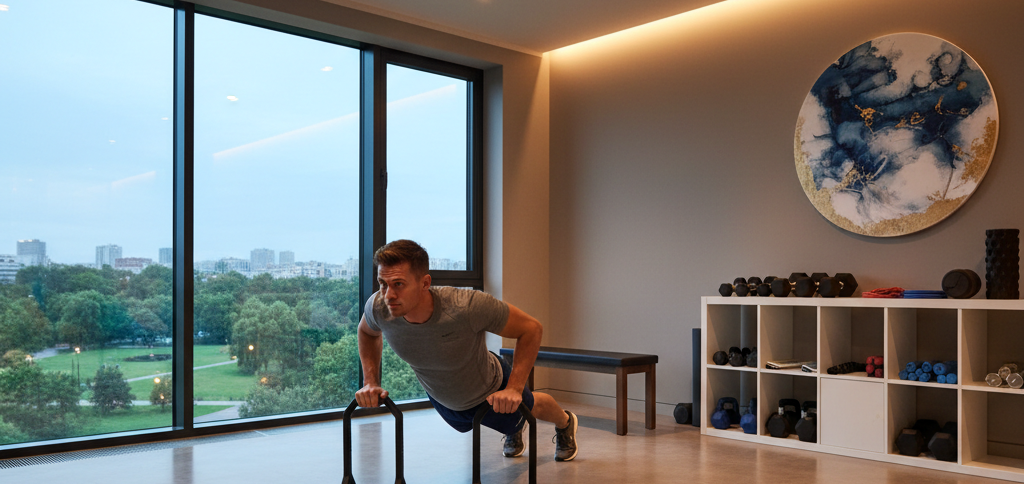
The classic push-up is the foundation of any home chest workout. Placing your hands slightly wider than shoulder-width apart increases the range of motion and places more emphasis on the outer chest fibers.
Proper form tips:
- Keep your body in a straight line from head to heels
- Lower your chest to within an inch of the floor
- Squeeze your chest at the top of each rep
- Avoid flaring your elbows past 45 degrees
Incline Push-Ups
Elevating your feet on a chair, couch, or step shifts the load toward the upper chest. This is one of the most underused home exercises for building the upper pectorals, which many people struggle to develop.
If you’re serious about building-to-build-your-chest-at-home-a-complete-guide/) for a full breakdown of progressive programming.
Decline Push-Ups
Placing your hands on an elevated surface like a step or low table creates a decline angle, targeting the lower chest. This variation is often overlooked but is essential for a complete chest development.
Diamond Push-Ups
Bringing your hands close together under your chest shifts more tension to the inner chest and triceps. These are harder than standard push-ups but excellent for adding density to the center of the chest.
Best Equipment-Assisted Home Chest Exercises
Dumbbell Chest Press
If you have access to dumbbells, the floor press is a highly effective substitute for the bench press. Lying flat on the floor naturally limits the range of motion at the bottom, reducing shoulder strain while still delivering strong pectoral activation.
[ movement stretches the pectoral fibers under load, which is a key driver of muscle growth. Lying on the floor with a slight bend in the elbow, lower the dumbbells out to your sides and bring them back together in an arc motion.
This exercise is especially effective for developing chest width and improving the mind-muscle connection with the pecs.
Resistance Band Chest Press and Fly
Resistance bands are one of the most underrated tools for home chest training. They provide constant tension throughout the movement, which is something free weights don’t always offer.
Anchoring a band behind you and pressing chest movements and how to replicate them, see the best cable exercises for a solid chest.
If you want to explore more band-based movements, these resistance band exercises are a great starting point for building a full routine.
How to Structure a Home Pec Workout
Sample Weekly Routine
| Day | Focus | Exercises |
|---|---|---|
| Day 1 | Volume | Wide push-ups, incline push-ups, floor fly |
| Day 3 | Strength | Diamond push-ups, floor press, decline push-ups |
| Day 5 | Hypertrophy | Band fly, dumbbell press, standard push-ups |
Progressive Overload at Home
Progressive overload means gradually increasing the reps each week
- Slowing down the tempo of each rep
- Increasing resistance with heavier dumbbells or stronger bands
- Progressing to harder push-up variations like archer push-ups or single-arm push-ups
Common Mistakes to Avoid
- Skipping the upper chest: Most people default to flat movements. Add incline push-ups or an elevated dumbbell press to every session.
- Rushing reps: Controlled, slow reps build more muscle than fast, sloppy ones.
- Neglecting recovery: The chest needs 48 to 72 hours between sessions to repair and grow.
- Ignoring supporting muscles: Strong triceps and shoulders improve pressing strength. Dip bar exercises are excellent for building both.
Supporting Your Training with Nutrition
Exercise alone isn’t enough. Adequate protein intake supports muscle repair and growth. Aim for 0.7 to 1 gram of protein per pound of bodyweight daily. Timing your nutrition around workouts also matters, and the best post-workout meals for muscle gain can help you optimize recovery.
Conclusion
The best way to work out your pecs at home combines bodyweight pressing movements, angle variation, and progressive overload. Push-up variations cover the basics well, and adding dumbbells or resistance bands unlocks a wider range of stimulus for growth. Consistency and smart programming will always outperform random, high-volume sessions without structure.
Whether you’re starting from scratch or maintaining progress between gym sessions, home chest training is a legitimate and effective approach when done correctly.
FAQs
Can you build a big chest with just push-ups?
Yes, push-ups can build significant chest mass when performed with proper form and progressive overload. Varying the angle and hand placement ensures you target all areas approach is to work in sets of 10 to 20 reps with 60 to 90 seconds of rest, aiming for 15 dumbbells expand your options considerably. Bodyweight exercises alone can build a strong chest, though adding dumbbells or resistance bands allows for more targeted and scalable training.
How often should I train my pecs at home?
Training your chest two to three times per week with at least 48 hours of rest between sessions is optimal for most people. This frequency supports muscle growth while allowing adequate recovery.
What is the best push-up variation for the upper chest?
Incline push-ups, where your feet are elevated above your hands, are the most effective bodyweight option
This article was last updated on September 8, 2026 .