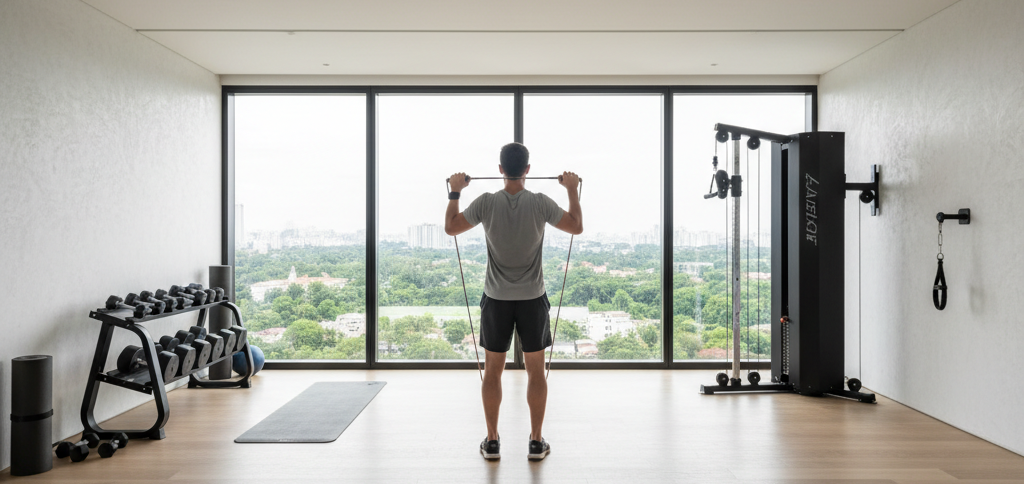
Face pulls are one of the most effective exercises for shoulder health, posture, and upper back development. But walking into a gym just to use the cable machine for one exercise is not always practical. The good news is that replicating this movement at home requires very little equipment, and in some cases, what you already own may be enough.
This guide breaks down the best face pull equipment for home use, covering each option honestly so you can make a smart, informed choice.
Quick Answer
The best face pull equipment for home is a resistance band anchored at face height. It closely mimics the cable machine version, is inexpensive, and requires minimal space. For those who want more resistance and versatility, a cable pulley system or a compact home gym with a cable attachment are strong alternatives worth considering.
Key Takeaways
- Resistance bands are the most accessible and affordable option for home face pulls
- A door anchor is essential for band-based face pulls and costs very little
- Cable pulley systems offer more resistance and a smoother feel than bands
- A rope attachment is needed for proper hand positioning regardless of equipment type
- Face pulls target the rear deltoids, external rotators, and mid-traps, making them essential for shoulder health
- Most home gym setups can accommodate face pulls without major investment
Why Face Pull Equipment Matters
Face pulls are not a high-load exercise. They rely on controlled tension through a specific range of motion, which means the equipment needs to deliver consistent resistance at the right angle, ideally at face height.
Using the wrong setup, like a band anchored too low or too high, changes the muscle emphasis and reduces effectiveness. Choosing the right equipment ensures you get the full benefit of the movement.
Best Face Pull Equipment Options for Home
Resistance Bands with a Door Anchor
Resistance bands paired with a door anchor are the most practical and widely used solution for home face pulls. They are inexpensive, compact, and easy to set up in seconds.
A loop band or tube band with handles works well. The door anchor slides over the top of a closed door, creating a secure attachment point at approximately face height. From there, the setup closely replicates the cable machine version of the exercise.
Key advantages:
- Low cost (typically $10 to $30 for a quality set)
- No permanent installation required
- Easy to adjust resistance by changing band thickness
- Portable and storable
The main limitation is that bands increase resistance as they stretch, which differs from the constant tension of a cable. For most people doing face pulls for shoulder health and posture, this is not a significant drawback.
If you want to explore more exercises you can do with this setup, 7 Great Resistance Band Exercises You Should Try is a solid resource.
Cable Pulley Systems for Home
A dedicated home cable pulley system delivers the closest feel to a commercial gym cable machine. These systems mount to a wall stud or power rack and allow you to set the pulley at any height, including face level.
Cable pulleys offer constant tension throughout the movement, which many lifters prefer for isolation work like face pulls. They also support a rope attachment, which allows the wrists to rotate naturally at the end of the movement for better rear delt activation.
This option requires a higher upfront investment, typically $100 to $300 or more, and some installation. However, it adds compatible with one as an add-on. If you already own a rack, this is an efficient way to add cable-based exercises without purchasing a separate machine.
The cable attachment mounts to the uprights of the rack, and you can set the height to match the face pull starting position. Combined with a rope attachment, this creates a very effective and durable home face pull station.
For those building out their home training space, How to Build a Home Gym on a Budget: A Step-by-Step Guide offers practical guidance on prioritizing equipment purchases.
Rope Attachment
Regardless of whether you use bands or a cable system, a rope attachment significantly improves the face pull experience. It allows both hands to move independently and lets you flare your elbows and externally rotate at the end range of the movement.
A standard tricep rope attachment costs between $10 and $20 and fits most cable systems and resistance band setups. It is a small addition that makes a meaningful difference in the quality of the movement.
Equipment Comparison Table
| Equipment | Cost | Setup Required | Resistance Type | Best For |
|---|---|---|---|---|
| Resistance bands + door anchor | $10 to $30 | Minimal | Variable | Beginners, small spaces |
| Rope attachment (add-on) | $10 to $20 | None | N/A | Improving any setup |
| Home cable pulley system | $100 to $300+ | Moderate | Constant | Serious home gym users |
| Power rack + cable attachment | $200 to $500+ | High | Constant | Full home gym setups |
What About Face Pull Alternatives?
If you find that face pull equipment does not fit your current setup or budget, several exercises target the same muscle groups effectively. Rear delt flyes, band pull-aparts, and prone Y raises all work the rear deltoids and external rotators without requiring any pulley system.
For a full breakdown of substitute movements, The 5 Best Face Pull Alternatives covers the most effective options with clear instructions.
Do You Need Special Anchoring for Home Face Pulls?
A door anchor or wall mount is necessary for most home face pull setups. Trying to anchor a band to a low point like a furniture leg changes the pulling angle entirely and reduces the effectiveness of the exercise.
For band users, a door anchor placed at the top of a doorframe creates a high enough attachment point. For cable systems, a wall-mounted bracket or rack attachment handles this automatically.
If you are also working on building a well-rounded upper body at home, How to Build Your Chest at Home: A Complete Guide pairs well with a face pull-focused shoulder routine.
Building a Balanced Home Training Setup
Face pulls fit naturally into a broader upper body training routine. They complement pressing movements by strengthening the muscles that stabilize and protect the shoulder joint. Adding them consistently, even two to three times per week, can reduce shoulder discomfort and improve posture over time.
For those expanding their home equipment beyond bands, The 10 Best Adjustable Dumbbells for Home Gym of 2026 and The 8 Best Weight Benches of 2026 are worth reviewing as part of a complete setup.
Conclusion
The best face pull equipment for home does not need to be expensive or complicated. A resistance band with a door anchor and a rope attachment covers the basics effectively and costs under $50. For those who want a more gym-like experience, a cable pulley system or rack attachment delivers constant tension and greater versatility.
Start with what fits your space and budget, focus on proper form, and add equipment as your training demands grow.
FAQs
Can you do face pulls at home without a cable machine?
Yes. Resistance bands anchored at face height with a door anchor replicate the movement effectively. Most people doing face pulls for shoulder health and posture will get excellent results from bands alone.
What resistance band is best for face pulls?
A medium-resistance tube band with handles or a loop band in the light-to-medium range works well. The resistance should allow 12 to 20 controlled reps without losing form.
Do you need a rope attachment for face pulls?
A rope attachment is not strictly required, but it significantly improves the exercise. It allows independent hand movement and better external rotation at the end of the pull, which increases rear delt activation.
Can you anchor a resistance band in a doorframe for face pulls?
Yes. A door anchor placed at the top of a doorframe creates the correct attachment height. The door must be fully closed and the anchor placed on the hinge side for maximum security.
Are face pulls worth adding to a home workout routine?
Absolutely. Face pulls strengthen the rear deltoids, mid-traps, and external rotators, which are commonly underdeveloped muscles. Regular face pulls support shoulder joint health and help counteract the effects of prolonged sitting and forward-rounded posture.
This article was last updated on October 6, 2026 .