

Choose the Flybird WB5 if you need a weight bench that folds down low for storage. The BowFlex 5.1S is a better fit if you have a clear upright storage spot and want a bench on transport wheels. Compare the Fitness Reality 2000 Super Max XL if your priority is a long back pad and the model’s adjustable seat-to-back fit. These benches solve different problems. The distinction is more important than a long list of advertised adjustment combinations.
Before buying, decide whether you want the bench to fit under furniture, park upright in a corner or roll behind a rack. Then measure the space and check the load limit with your body weight and both dumbbells included. A bench that fits in a closet but leaves your feet dangling or makes you change your pressing position is a poor fit for daily use. If your priority is decline core work, our sit-up bench comparison covers dedicated roller and slant-board options.
Affiliate disclosure. As an Amazon Associate, The Fitness Blog earns from qualifying purchases. We checked the exact US Amazon offers on November 8, 2026. Offers and availability can change.
Foldable weight benches at a glance
| Model | Best for | Key detail | Main tradeoff |
|---|---|---|---|
| Flybird WB5 | Low storage openings | 30.1 × 13 × 8.6 inches folded, 800 lb rated | Check 18.5-inch flat height and pad gap |
| BowFlex 5.1S | Upright storage on wheels | 23.9 × 28.1 × 52.3 inches stowed, 600 lb combined | Needs dedicated upright space |
| Fitness Reality 2000 Super Max XL | Longer back-pad support | 37-inch back pad, 850 lb listed limit | Verify storage fit if space is tight |
Amazon bestsellers for foldable weight benches
The Amazon bestseller display below is separate from the editorial comparison. Check the model number, folded dimensions and manufacturer instructions before buying a bench shown here.

- Bench made with uv-protected high-density polyethylene (HDPE)
- Designed with safety locking mechanism
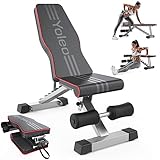
- 【Yoleo】is a fitness equipment brand that aims to provide affordable, durable and effective weight...
- 【Stable Structure】Heavy duty steel makes this weight bench a sturdy support for the toughest...
- 【QUICK ASSEMBLY, EASY FOLDAWAY】This storage ottoman from the SONGMICS MAZIE Collection has a foldable...
- 【AMPLE STORAGE】Measuring 15"D x 43"W x 15"H (38 x 110 x 38 cm), this storage bench offers a 35-gallon...

- Quality & Materials: This benchtop is made with high quality HDPE material, solid and enough thick. The...
- Easy to Carry and Store: This portable bench can be folded easily to save space for storage in tight...

- Versatile and Convenient: This 6 ft plastic folding bench is perfect for a variety of occasions such as...
- Outdoor Durability: Made from high-quality plastic materials, this outdoor folding table is designed to...
Three foldable and stowable benches compared
Flybird WB5 · Low storage openings

Check Flybird WB5 on Amazon US
The WB5 is the bench to compare first for an apartment or multipurpose room where the bench needs to disappear under furniture. The FED Fitness specification page identifies it as WB5 or FB149 and lists a folded size of about 30.1 by 13 by 8.6 inches. The bench is listed at 18.5 inches high when flat. Eight back-pad positions and three seat settings cover flat, incline and decline setups, with a manufacturer-stated maximum capacity of 800 pounds.
Measure the storage opening before committing to the WB5. A bed with nine inches of clearance at the edge may have a lower middle support or a rug that reduces the usable opening. The compact fold is also a different feature from upright storage. If you plan to keep it standing up, follow the manual for the approved storage position. Do not assume a bench can balance securely on end because the frame folds.
For pressing, check the pad height and gap as well as the capacity. FED lists a two-inch gap between the seat and backrest. A gap can be unobtrusive in one setup and noticeable in another depending on where your hips and lower back sit. A shorter lifter who struggles to plant both feet on an 18.5-inch bench may get a better fit from a lower option. The WB5 is the smallest stowed model in this comparison, and that is the reason to pick it.
BowFlex 5.1S · Upright storage on wheels

Check BowFlex 5.1S on Amazon US
The BowFlex 5.1S is an upright-stow design with transport wheels. According to BowFlex’s model documentation, it has six backrest positions including flat and decline, an adjustable seat, and a 600-pound load limit. BowFlex lists the bench at about 60 pounds, with a stowed footprint of roughly 23.9 by 28.1 inches and a height of 52.3 inches. The load limit covers the user and external load together.
This is the bench for someone who prefers to roll equipment a short distance and has a permanent parking spot for it. It saves floor length when upright, but still takes up real space in a closet or corner. Mark the stored footprint with tape and check that there is enough room in front to lower the bench without hitting a cabinet or doorway. An overhead shelf at about chest height could rule out a corner that looks wide enough on the floor.
The 5.1S is less attractive if you need to slide a bench under a bed or if your total working load approaches its rating. The wheels help on a suitable level floor, but they do not remove the need to lift or tip the bench as directed. The practical selling point is a defined upright storage method paired with an adjustable bench for a regular workout area. Check that your Amazon offer says 5.1S rather than a similarly named BowFlex bench.
Fitness Reality 2000 Super Max XL · Longer back-pad support
Check Fitness Reality 2000 Super Max XL on Amazon US
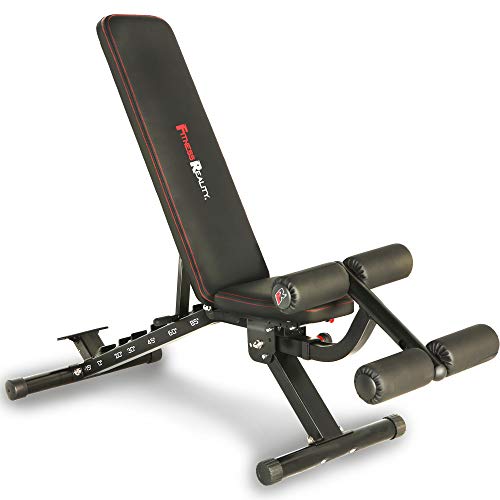
The Fitness Reality 2000 Super Max XL makes sense if a longer back pad is important and you want a folded-storage bench with adjustable seat and backrest positions. The Amazon offer identifies model 2806 and lists a 37-inch backrest, seven backrest settings, three seat settings and an 850-pound capacity. The model 2806 owner’s manual details assembly, adjustments and transport. This is the 2000 XL, a different model from the older 1000 Super Max.
A longer pad can help a taller lifter who otherwise ends up with the back of their head off the bench during setup. What matters is where your head, shoulders and hips actually land. If you can, compare your preferred training position with an existing bench and note how much pad length you use. The product name and maximum user height are less useful than a direct fit check. Check the flat pad height at the same time so that a longer pad does not solve one issue while creating another at your feet.
Fitness Reality markets this model around the seat-to-back fit. Use the manual to understand how those adjustments work before buying for a particular lift. The best choice is the one whose flat position feels like a usable bench and whose incline position supports the angle you train at regularly. Confirm the exact storage dimensions and orientation with the seller if your storage opening is tight. For a shallow under-bed space, the WB5’s published folded measurements make it easier to assess in advance.
How to choose a folding weight bench
Decide how you will store it every week
A frame that folds into a short package is useful if your storage opening is low and wide. Measure the opening in three directions and check the route along the floor, including rug edges and trim. Leave room for your hands and for any handle or pin that protrudes when folded. A product might fit in the final location and still be hard to turn into place.
An upright-stow bench suits a room with unused vertical space and enough floor room to tip or roll the bench into position. Check the stored height and footprint, then measure the available space in front. Do not prop a bench upright unless the manufacturer permits that storage position. Follow the folding and locking sequence in the manual every time. Keep folded equipment away from an exit or any area where a child or pet could knock it over.
Decide who will move the bench. A model that is easy for one person to tip onto its wheels can be awkward for another. If the bench will stay in a garage gym and move only a few feet, wheels and a handle may matter more than a low folded height. If it needs to go between floors, account for the full bench weight and shape. If the storage routine is too cumbersome, the bench is more likely to sit in the way.
Calculate your working load before comparing ratings
Use the manufacturer’s definition of the load limit. Where a rating is for user plus load, a 190-pound lifter pressing two 70-pound dumbbells puts 330 pounds on that calculation. For a barbell, include the bar and all plates. Also account for any model-specific limits for adjustments or attachments in the manual. A capacity printed on a listing is not a rack rating or a promise of stability in every setup.
Compare the rating with the weights you realistically plan to use, including your next progression. If you are close to the published limit, buy a bench better suited to that load. Staying within a rating does not fix a frame that rocks, a pin that fails to seat or a bench that is poorly supported on a soft floor. Inspect the hardware and use the bench only as intended. Check the exact seller model if product listings for the same brand use different capacity figures.
Check flat height, width and pad length
Measure the flat height of a bench that already feels comfortable, if you have one available. A manageable height lets you place both feet securely while your upper back stays supported. If a bench is too high, you may have to reach for the floor. If it is very low, getting into position with dumbbells may feel cramped. Use your usual training shoes when comparing.
Back-pad width changes how much support you feel around the shoulder blades and how easily you can move your arms. People who want more support are not always comfortable with a wide pad for every exercise. Consider the lifts you perform most often. A pad that feels ideal for flat pressing might get in the way during certain rows or fly variations. Look for exact pad measurements or use the return window to assess the fit.
Check the gap between the seat and the backrest in flat and incline positions. A modest gap may be unnoticeable when it falls away from a contact point. It can be distracting if your hips land directly on it. Pad length, gap and width are best considered together. Buying by the maximum load figure alone can leave you with a bench that technically supports you and still feels awkward every time you set up.
Compare the angles you will actually use
Flat and one or two useful incline positions cover a lot of common home dumbbell workouts. More settings help if they land at angles you want and are quick to select. Check the actual positions rather than multiplying all seat and back settings together. A useful seat angle can help you stay in place on an incline, while a back pad that gets close to vertical is useful when you prefer a supported seated press. If you rarely use decline, do not give it more weight in the decision than flat comfort or storage.
Look at how the backrest and seat lock. A ladder support, pull pin or other mechanism can work well when fully seated and maintained. It should be easy to tell when the bench is ready to use. Adjust it without weight on the bench and follow the manual for how to secure it. Check the separate folding lock so you understand which controls change the exercise position and which release the frame for storage.
Set up the bench for the workout you do
For dumbbell pressing and rows
Leave enough space for getting into position, picking up the weights and returning them to the floor or rack. Clear space to both sides of the bench. A narrow storage spot can be a perfectly good home for the bench after training and a poor place to press. Check that the bench sits level in its working position and cannot rock over a mat seam or floor transition.
For supported rows, think about where your hand, knee or chest makes contact with the pad and whether the base or wheels get in the way of your stance. If you mostly do dumbbell work, easy angle changes and a comfortable flat setup may be worth more than another heavy-duty marketing claim. Our home weight benches guide compares other formats if folding is optional.
For barbell work in a rack
Measure the space between the rack uprights and the bench’s widest feet. Check the position of any rear crossmember. A bench can slide between the uprights and still be stopped short of the right position by its base. Confirm where the bar sits over the bench in your working position and make sure you can set the rack safeties according to the rack’s instructions.
Use equipment intended for the load and exercises you plan to do. The bench does not replace suitable rack safeties or a competent spotter. Test your setup with an unloaded bar before using training weights, including whether the safeties can catch the bar at an appropriate height. See our bench press racks comparison if you are buying the rack and bench together.
For a room that serves more than one purpose
Plan a simple setup routine. Clear the floor, unfold or lower the bench, confirm the frame and pad locks, and position the weights where you need them. After training, put the weights away before releasing the folding mechanism. This routine keeps the bench useful in a room that doubles as an office, guest room or family space.
Check the floor surface before adding a mat. Uneven tiles or soft flooring can make a bench feel unstable even when all bolts are tight. If you use a protective mat, keep all contact feet on the same level surface. Clean the pads and inspect fasteners and locks as the manual directs. If the bench develops movement in a joint, a damaged pad or a pin that no longer engages reliably, stop and resolve it before using the bench again.
How we selected these benches
We compared an under-furniture folding option, a purpose-built upright-stow model and a folding bench with an extended backrest. Selection was based on exact US Amazon offers, manufacturer documentation and practical fit criteria. Where a number comes from a listing, it is attributed to that listing. Published capacities are equipment limits to check against the manual, and were not independently load tested for this guide. Choose based on the workouts you actually do and where the bench will go afterward.
Frequently asked questions
What is the best foldable weight bench for under-bed storage?
The Flybird WB5 is our first pick for a low opening. The manufacturer gives a stowed height of 8.6 inches and a folded length of 30.1 inches. Measure the lowest point along the whole path under the bed, including a center beam or nearby rug, and leave room to slide the bench out.
Is a stowable bench the same as a folding bench?
A folding bench collapses part of its frame to make the package smaller. A stowable model such as the BowFlex 5.1S can park upright in its designated storage configuration. Retailers may use the terms loosely. Check the manufacturer’s storage instructions and measurements to determine which design suits your room.
Does weight capacity include my body weight?
When the maker specifies a combined limit, it includes the user and the external load. A person using two dumbbells needs to count both of them. Read the exact model’s manual and confirm any limits for attachments or specific positions before buying for heavier work.
What should I choose if I am tall?
Compare backrest length and where you sit on it, especially if your head is unsupported on the bench you use today. Fitness Reality lists a 37-inch backrest on the 2000 Super Max XL. Check pad height and seat position as well. A longer pad is only helpful if the rest of the bench still lets you set up comfortably.
Can a foldable bench be used for barbell bench presses?
It can if the model is intended for that load and setup, fits the rack, and works with properly positioned safeties. Measure the clearance between the rack uprights and check where the bench sits under the bar. Make sure every relevant adjustment and folding lock is fully engaged before use.
Do I need a decline setting?
Buy decline if you already use it and the model has the setup and support you need. For many home routines, flat and several incline options are enough. If you only do occasional decline work, give more weight to a good flat position, an appropriate load rating and a storage process you can manage.
Should I choose a light bench or a bench with wheels?
A light bench is easier to relocate when it must be lifted. Wheels are more helpful when the bench moves a short distance on a smooth, level surface. Check the whole route, including door lips and rugs, and follow the maker’s directions for lifting and rolling. Do not assume wheels make a heavy bench suitable for stairs.
The bottom line
Buy the Flybird WB5 when low storage clearance drives the purchase. Choose the BowFlex 5.1S if upright parking and wheels are more useful. Put the Fitness Reality 2000 Super Max XL on your shortlist if back-pad length is the priority. Measure the working position and storage position, calculate your combined load, and check the locks and pad fit before the first loaded set.
This article was last updated on November 13, 2026 .


