Choose the Titan plate-loaded seated calf raise if your gym already uses Olympic plates and you want a simple machine with two loading posts. Choose the Body-Solid Powerline PSC43X if you have standard plates and want a compact dedicated station. Choose the GMWD T6 if several people will share the machine and you need more adjustment or want to use either plate bore. Before buying, confirm that your thighs fit under the pads, your forefeet sit securely on the platform, and you can reach the latch from the seat.
As an Amazon Associate, The Fitness Blog earns from qualifying purchases. The picks use manufacturer specifications and exact Amazon US listings. The published maximum load is a limit for the model, not a suggested exercise load or a measurement of what you feel at the footplate.
Compare the three picks
Swipe to compare on smaller screens.
| Machine | Plates | Fit | Key detail |
|---|---|---|---|
| Titan Seated Calf Raise | Olympic | Four pad heights | Dual weight posts |
| Powerline PSC43X | Standard, adapter optional | Adjustable thigh pads | Compact frame |
| GMWD T6 | Standard and Olympic | Vertical and horizontal adjustment | Transport wheels |
Seated calf raise machine bestsellers
Amazon’s bestseller list changes independently of our recommendations. Check the exact model, intended use and included parts before ordering.

- 【Professional and Effective Exercise Device】This seated calf raise machine is designed to exercise...
- 【Sturdy】The seated calf raise machine is constructed from sturdy commercial tubing. The special...
- Ergonomic Optimized Leg Extension Machine: Combines user-friendly ergonomic design and advanced...
- Saver, More Focused Workout: Unique foot platform design eliminates stress compression on the ball of the...

- WORK OUT YOUR CALVES AT HOME: Calf raise machine customized for home gym. The improved design of the...
- POWERFUL SUPPORT STRUCTURE:Calf machine built with 12 gauge steel and a stable triangular frame, ensures...

- 【Ergonomic Optimized Leg Extension Machine】Combines user-friendly ergonomic design and advanced...
- 【More Focused Workout】Unique foot platform design eliminates stress compression on the ball of the...

- ★ TARGET YOUR CALVES ★ – The Synergee Calf Raise Machine is the most effective tool for targeting...
- ★ COMPATIBLE WITH 1” AND 2”-OPENING PLATES ★ – Load up the Synergee Calf Raise machine with...
The best seated calf raise machines by use case
Titan plate-loaded seated calf raise | Best for an Olympic plate setup
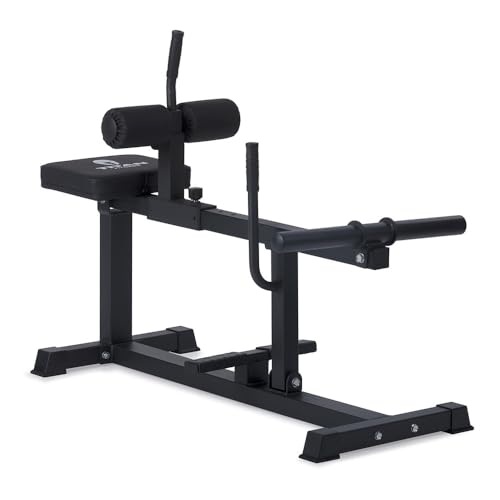
The Titan plate-loaded seated calf raise is identified as CALFRAISE_BK, SKU 401473, in the Titan support manual index. Titan publishes a 48-inch depth, 23.5-inch width and 39.5-inch height. The two Olympic posts are 49 mm in diameter with a published length of 9.5 inches. The thigh pad has four height settings, and Titan rates the current model for up to 550 pounds. Some older Titan listings describe a different version. Check the model label and supplied manual before relying on the current specs.
This machine makes sense if you already own compatible Olympic plates and collars and want to use them without adapters. Its footprint is straightforward to mark out, but you still need space at both posts. If the machine will sit beside a rack, check that you can load the far post without reaching across the pivot arm or lifting a plate over the rack’s feet. Think about the thickest plates you own. Their thickness and the space your collars require are more useful than the headline rating when you assess your working load.
Four thigh-pad positions may be enough for a single user. If a household has several users with very different leg lengths, compare the travel and horizontal adjustment of the GMWD instead. The Titan is the one to buy when the pad, foot bars and release handle already line up for you and the extra settings would add little.
View Titan Seated Calf Raise (Black) on Amazon US
Powerline PSC43X | Best for standard one-inch plates
The Powerline PSC43X is a compact Body-Solid model with a standard one-inch plate post, an angled foot platform and a lever that Body-Solid describes as using a 3:1 weight ratio. See the PSC43X manual for setup and the correct plate attachment. Olympic users should check the compatible optional adapter and collars before ordering. This is the Powerline model, separate from the larger Body-Solid GSCR349B.
This is the straightforward pick if standard plates are already sitting unused in the gym. A compatible collection of small plates can make it easy to change the load in modest increments. If you only own Olympic plates, compare the complete cost and usable post length with an adapter installed. The extra sleeve may change how a stack of plates fits and which collar you need. If you prefer to keep one set of collars for everything, the Titan avoids that particular adjustment.
A lever ratio can make a small added plate feel more significant than you expect. Do not calculate a personal working weight by multiplying the printed number on the plates. The geometry changes through the movement, and the empty lever and its weight matter too. Start with the minimum setup the manual permits and record the plates and configuration you actually use. That gives you a repeatable baseline even when a different gym’s machine has the same brand name.

View Powerline PSC43X (Midnight Black) on Amazon US
GMWD T6 T6-091 | Best for shared fit and mixed plate sizes
The GMWD T6 adds a removable sleeve for one- or two-inch plates, transport wheels and band pegs. GMWD lists six vertical and six horizontal adjustments for the fit, a 49-by-22-inch footprint and a 550-pound capacity. The exact linked offer is red and black, model T6-091. The manufacturer’s direct stock and Amazon sellers can differ. Buy by the model and the parts in the offer rather than assuming another T6 listing has the same package.
Choose the T6 if you already use both plate sizes or you need to adjust the pads for people with different thigh lengths. Changing a fore-aft position can matter as much as raising a pad. If a taller user feels contact too close to the knee or a shorter user cannot keep the forefoot on the platform, check whether the adjustments address those issues. A bigger selection of settings is useful only when the pins seat fully and the fit stays stable through the movement.
The wheels can help when the room is shared. Check how the maker says to unload and move the frame, then decide where it will go between sessions. Band pegs are optional, and the manufacturer says bands are not included. If you want to use them, confirm the approved setup and any combined loading limits. If you expect to use plates only and leave the machine assembled in one spot, compare this model’s adjustment range against the simpler Titan or Powerline instead of paying attention to extra attachment points.

View GMWD T6 (Red and black) on Amazon US
How to choose a seated calf raise machine
Check pad placement with your training shoes on
Sit on a similar bench if possible and measure where your thighs and forefeet will be. The pad needs to rest securely on the thigh in the position the manufacturer specifies. You should be able to reach the intended foot contact point without sliding forward on the seat. Check whether your heels have room to travel in the range you want to use. A bulky sole can change both the starting height and where your foot sits on the edge of the platform.
If the pads are too far forward, turning a height pin alone may not make the fit comfortable. Look for separate horizontal movement, or a seat and pad layout that matches your legs. Check the lowest position for a shorter user and the highest setting for a taller user. If you share a machine, note the working positions for each person. That saves guessing after somebody else moves a pin. Only make adjustments while the machine is in the position required by the manual.
Confirm that you can operate the latch from the seat
Before adding plates, read the exact steps for supporting the arm, releasing the latch and parking the load again. Some machines put the release to one side, which can be awkward beside a wall or another bench. Make sure you can reach it without shifting your feet away from the platform. Practice at the lightest permitted setup. An accessible latch is a better reason to choose a machine than a frame rating you won’t approach.
Think about how you will exit when the set is over. You need to be able to return the lever to the parked position with control. Leave enough room to stand up without catching a shoe on the frame or stepping around a loose weight. If a stop does not engage cleanly, resolve the problem before training. Do not assume a similar machine’s hardware works the same way.
Check the load you can fit, not just the rated capacity
Read the weight-post diameter and length. Match them with the plates and collars you have. Stack one side of your planned load on the floor to see how much sleeve it occupies, then add the collar width. Check where the plates sit when the arm moves, because a wide plate can touch another part of the frame even if the center hole fits. Follow the maker’s loading instructions. On a two-post design, the capacity should not be read as a separate limit per post.
Choose plate increments that make sense for the machine. A small change on a lever can feel different from the same change on another piece of equipment. Keep a log of the model, plates and any pad settings. If you alternate between a home machine and a gym stack, compare your progress separately. Neither the numbers printed on a stack nor a published lever ratio tell you how every repetition will feel on a different machine.
Plan the working floor space and delivery
Mark the published footprint and add space for the plate-loading route, the seat entry and the latch. If you have a storage shelf nearby, open its doors and take down a plate to test the path. The narrow end may need more room than the side you thought was the main access point. If you need to move the machine after each session, plan where it goes and how you will move it without lifting a loaded arm. Use the transport procedure in the manual.
Check carton dimensions and delivery terms before purchase. A frame that fits in a basement may still come in a long package that cannot turn on the stairs. Plan enough help to unpack and assemble it. After delivery, identify the model and the parts for the lever, latch and adjustment pins before tightening the frame. If the plates run close to a rack, wall or baseboard, move the machine to an open location rather than accepting that clearance.
Decide whether you need a dedicated seated station
A seated calf raise gives you a repeatable bent-knee setup without having to balance a separate weight on your thighs. That can be worth buying if you train the movement often, share the room and already have plates. If you train calves occasionally and have a suitable setup you can use comfortably, a dedicated frame may add little. Start with the movement you want to repeat and how long it takes to set up, then decide whether the space tradeoff is worth it.
Seated and standing calf raises use different knee positions. Bending the knee shortens the gastrocnemius across the knee while the soleus does not cross that joint. That is why a seated calf raise is often chosen to train with the knee bent. It still involves the lower leg as a whole. Choose the machine for the position and control you want, rather than assuming the pad location can isolate one muscle completely.
A dedicated vertical leg press is a different purchase. Compare it if broader leg training is the priority. A home squat rack makes more sense if most of your program uses a free bar. If you already own equipment that supports a calf exercise, check its exact instructions and attachments before buying a separate machine. Avoid improvising a foot platform or latch on an incompatible frame.
First-use checks and upkeep
Assemble and place the machine as the manual directs. Check that all base feet make contact and that the seat, thigh pads, posts and latch are secure. Start unloaded if the manual permits it. Confirm that the lever moves without catching on another part and that you can park it from the seat. Choose a range you can repeat under control. If an unusual noise, tilt or sticking appears, stop and inspect the machine rather than adding plates to see if the movement improves.
Wipe the contact surfaces after use and check the pins and hardware at the manufacturer intervals. Use only the lubricant and service steps the maker specifies. Check for loose rollers, wear at the latch and damage to pads or the foot platform. Keep the exact model, manual and purchase information together. A replacement part with a similar appearance can have a different pin diameter, length or load rating.
Ask about wear parts before choosing a used machine
A used frame can cost less, but it pays to identify the exact model before arranging transport. Ask for a picture of the label, a parts list and clear views of the pivot, catch and loading posts. Look for makeshift pins, bent hardware, torn pads and missing foot grips. Check whether the seller can show the unloaded lever moving through the intended range and parking as documented. If you cannot verify the condition of a load-bearing part, budget for a new machine or one you can inspect properly.
Look up how to order a replacement latch, pop pin or pad for the exact version. This matters more when a brand has used the same family name for several machines. Check whether you need specific collars or an adapter and include their cost in your comparison. If you cannot obtain the part that secures the lever, don’t improvise a substitute. Walk through delivery and assembly as well, since moving a used machine in one piece may be less practical than bringing in a new frame in cartons.
Consider how quickly you can change the load
If you alternate sets with a partner, plan for the time needed to unload and reload the lever while it is parked. Keep the plates you expect to use within easy reach without blocking access to the seat. If you change resistance frequently, a machine with compatible small plates and room at each loading post may be easier to use than a larger unit with a less convenient layout. For a single user, a fixed spot and a few carefully chosen increments may be enough.
Frequently asked questions
Does a seated calf machine include plates?
Most plate-loaded machines are sold without them unless the offer says otherwise. Check the carton list for plates, collars and any adapters. If you already own plates, verify the bore and the type of collar before counting those pieces toward your budget.
Can I use Olympic plates on a standard post?
Only with the manufacturer-approved setup. The PSC43X uses a standard post and may take an optional Olympic adapter. A loose plate on an undersized post is not the same as a correctly fitted adapter and collar. The Titan takes Olympic plates directly, and the GMWD uses a removable sleeve.
How much weight should I start with?
Use the lightest permitted setup while you learn the latch and find a repeatable range. The empty lever already has resistance. Add only what you can control, and record the plates and settings. Do not start from the capacity number or copy a load from another machine.
What if the thigh pads are uncomfortable?
Check the height and fore-aft position against the manual. The pad should contact the intended part of your thigh without forcing you to shift forward or reach for the platform. If the adjustment range does not work, compare another geometry. Stop if the movement causes pain and get appropriate advice if needed.
Are band pegs necessary?
No. They are an optional feature on some machines. If you mainly want repeatable plate loading, prioritize fit, post compatibility and latch access. If you do want bands, follow the maker’s instructions and check the approved positions and loading limits.
Is a seated calf machine worth it in a small home gym?
It can be if you frequently want a supported bent-knee movement and can leave room to load both sides and use the latch. If you have to move several pieces of equipment each time or need the floor for more exercises, compare a smaller station or an exercise supported by your current equipment.
This article was last updated on November 13, 2026 .